Everybody's got a moment where the person they are gets tested for real. Not the version you talk about. The real one. Mine happened on a sidewalk at 8:47 in the morning, with a clock running and my whole future on the other side of it.
Let me tell you how it went, and what it cost me, and what it turned out to be worth.
One Shot
You have to know how much this interview meant, or none of the rest of it lands.
I was twenty-four and I was underwater. My mom had gotten sick, the serious kind, and I was the only earner, and I was working two nothing jobs and still watching the bills stack up like a wave that was going to come down on us. I'd lie awake doing math that never worked.
And then, out of nowhere, this interview. A real company. A real job with a real salary and actual health insurance, which, when your mom is sick, is not a perk, it's oxygen. A guy like me, no degree, no connections, doesn't get looked at by a place like that. But somebody passed my name along, and they called, and they gave me a shot.
One shot. Nine a.m. And the woman on the phone said it twice, kindly but clearly. Please don't be late. We run on time here.
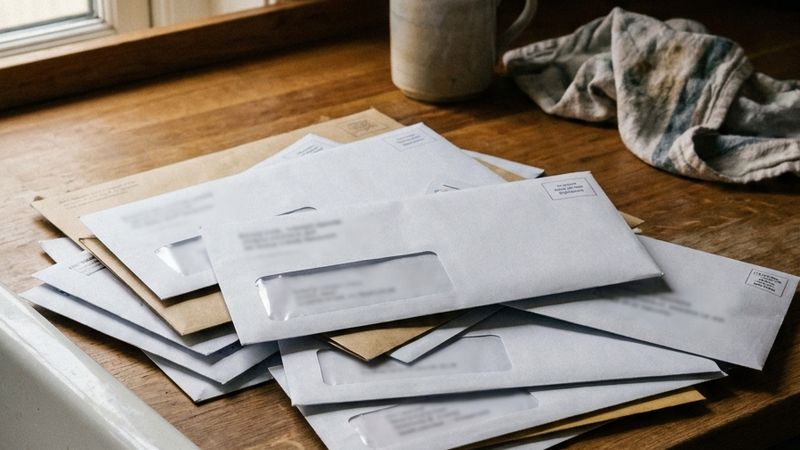
I'd run the numbers so many times they'd stopped feeling like numbers. There was a stack of envelopes on our kitchen counter I'd quit opening, because opening them didn't change what was inside and a closed one is easier to sleep next to. And my mom kept apologizing for being sick, which is a thing that will break your heart clean in half, your own mother saying sorry for having a body that let her down. This job was going to make her stop saying sorry. That's what it meant. That's what I was walking toward that morning.
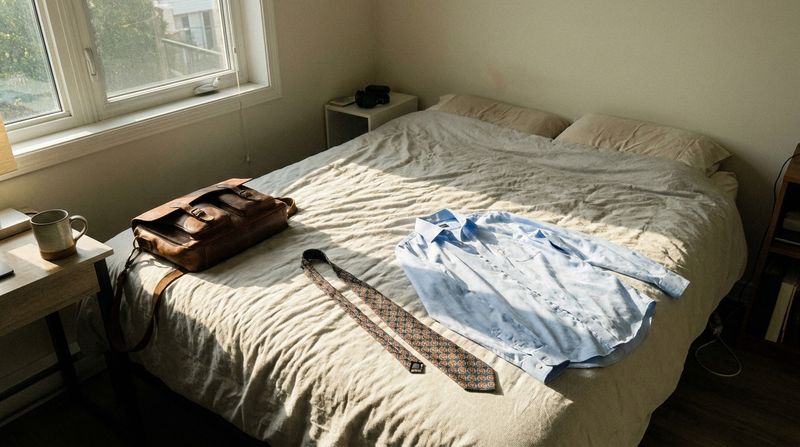
I borrowed a tie off a buddy. I practiced answers in the bathroom mirror for a week. I did not sleep the night before. This was the door out of the hole, for me and my mom both, and I was going to be early, and I was going to be perfect.
The Man on the Ground
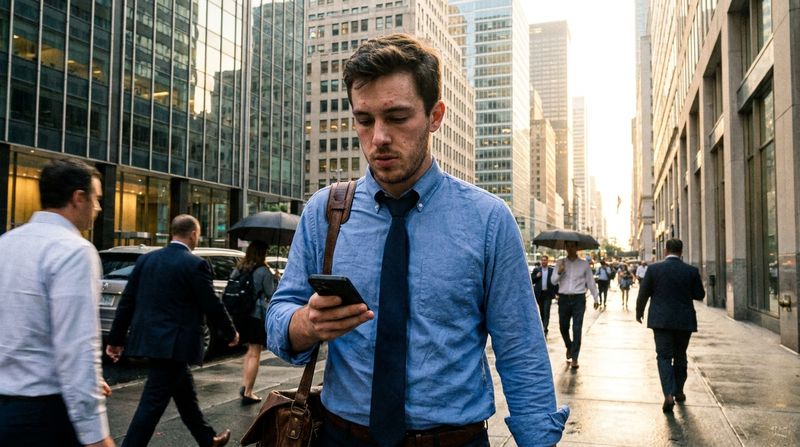
I got off the bus early on purpose, gave myself a cushion, and I was walking the last few blocks with twenty minutes in my pocket, feeling as ready as I was ever going to feel.
And that's when I saw him.
An older man, down on the sidewalk. Not sitting. Down. His grocery bag had split and there were oranges rolling into the gutter, and he was on his side on the concrete, and his face was gray.
And here's the part I still can't shake. People were walking around him.
Businesspeople, coffees in hand, stepping around a human being on the ground like he was a crack in the pavement. Everybody late for something. Everybody figuring he was somebody else's problem, or a drunk, or not their business. A whole river of people flowing around this old man like water around a rock.
Did I hesitate? Yeah. I did. For about four seconds I thought about my mom, and the bills, and the one shot, and the clock, all of it in one sick flash. Four seconds. I'm not going to pretend I'm a saint. I did the math and the math said keep walking.
And then I knelt down.
8:47
He grabbed my hand the second I got down there. Hard. His grip was all panic. He was clammy and cold and his lips were going a color lips shouldn't go, and he looked at me with these terrified eyes and I could see he thought he was dying alone on a sidewalk while the whole city stepped over him.
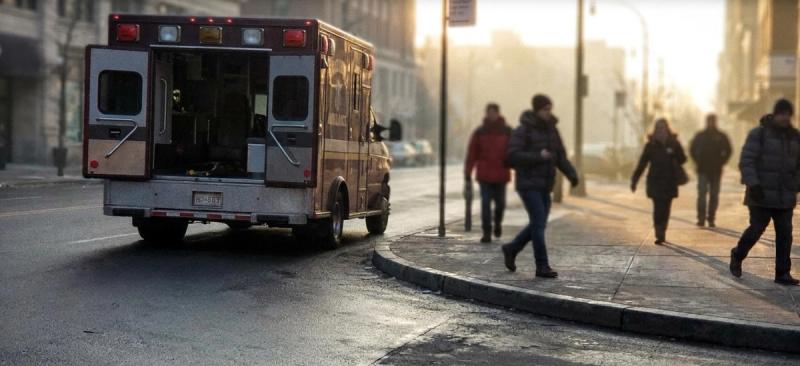
I called 911. The dispatcher was calm, told me it sounded like his heart, told me to keep him still and keep him talking and stay with him until the bus got there.
Stay with him.
I looked up at the clock on the bank across the street. 8:47. My interview was in thirteen minutes, three blocks away. And I understood, completely, in that moment, that there was no version of the next hour where I made both. If I stayed, I missed it. Full stop.
So I stayed. I held that old man's hand on the concrete and I talked to him. Told him he wasn't alone, help was coming, I wasn't going anywhere. Asked him his wife's name to keep him with me, and he said Ruth, and I said tell me about Ruth, and he did, in pieces, while the sirens got closer.
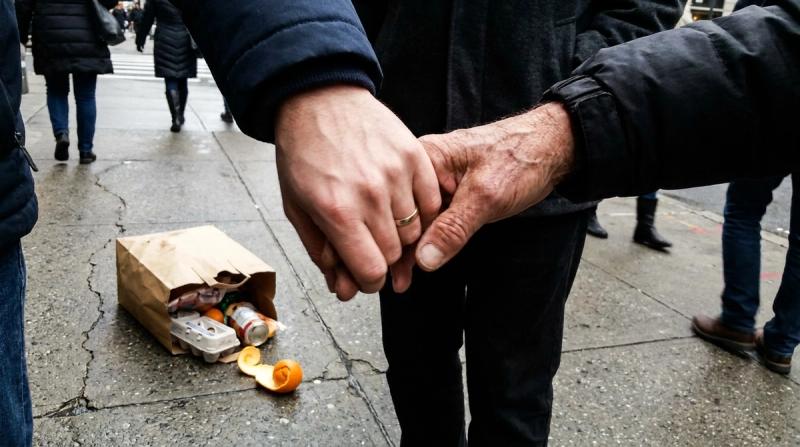
He told me, in pieces, that they'd been married fifty-one years. That Ruth would have his coffee waiting when he got home and would be furious at him for scaring her like this. That he wasn't frightened of dying so much as of her getting the phone call. He kept squeezing my hand every time he lost the thread, checking I was still there, and I kept telling him I'm here, I've got you, tell me more about Ruth. I've thought about that a thousand times since. That the most important conversation of my life, the one that quietly decided everything, I had on my knees on a sidewalk with a man I was certain I would never see again.
Nine o'clock came and went. I felt it go. I didn't even have a free hand to call and explain, and honestly, what was I going to say. I'm sorry, I'm on the ground with a dying stranger. So I said nothing, and I missed it, and the door out closed, and I stayed on that sidewalk until the paramedics loaded him into the ambulance and one of them clapped me on the shoulder and said, kid, you probably just saved his life.
The Three Weeks After
The weeks after deserve the honest version, because it's easy to tell this story like I felt great about my good deed. I didn't. I felt sick.
I went home and I told my mom I'd blown it, and I couldn't even tell her why in a way that made it okay, because how do you explain that you traded her health insurance for a stranger's oranges. She said I did the right thing. Moms say that. It didn't fix the numbers.
I called the company the next day to at least apologize. Got a voicemail. Left a rambling message that I'm sure sounded like an excuse, because "I missed your interview because a man collapsed" is exactly what somebody who overslept would make up. I never heard back. Of course I didn't. Why would they.
So I went back to drowning. Two nothing jobs, the wave still coming. And I tried not to think about the borrowed tie hanging in my closet, and mostly failed.
Who He Was
Almost a month later, a car I didn't recognize pulled up outside our building, and a woman about my mom's age knocked on our door and asked if I was the young man who'd stayed with an old man on Fifth and Market on the morning of the twelfth.
My first thought was that I was in some kind of trouble. I said yeah, that was me, is he okay.
He was okay. It had been his heart, a bad one, and the paramedics had told his family that the thirteen minutes a stranger spent keeping him calm and still on that concrete was very likely the difference. His family had been searching for me for weeks, working backward from the 911 call, because the old man woke up in the hospital and the first thing he did, before he asked about anything else, was ask them to find the young man who held his hand.
And then she told me who he was.
His name was Warren, and he was the founder of the company. My company. The one with the nine a.m. interview I'd blown to stay with him. He'd built it from nothing forty years earlier, and he still walked to that same building most mornings out of habit, and he'd collapsed three blocks from the front door, on his way to the office of the company I was so desperate to work for that I'd given up the interview to save the man who started it.
"He didn't know who you were," she told me. "And you didn't know who he was. That's the whole point, he said. He said a hundred people who worked in his own building walked past him that morning to be on time for him. And the one person who stopped to save his life was the one kid who was about to lose everything by doing it. He said that's the only interview that's ever meant a thing to him in forty years."
The Job I Didn't Interview For
Warren hired me himself, from his hospital bed, before he'd even come home. Not the entry-level job I'd applied for. He put me somewhere he could keep an eye on me, and he told his people, this is the one, watch him, and then he spent the next several years teaching me the business himself.
My mom got her insurance. Got her care. She's still here, matter of fact, and she and Warren got to be friends, two people who both figure they owe the other one their kid, which is a strange and beautiful thing to watch.
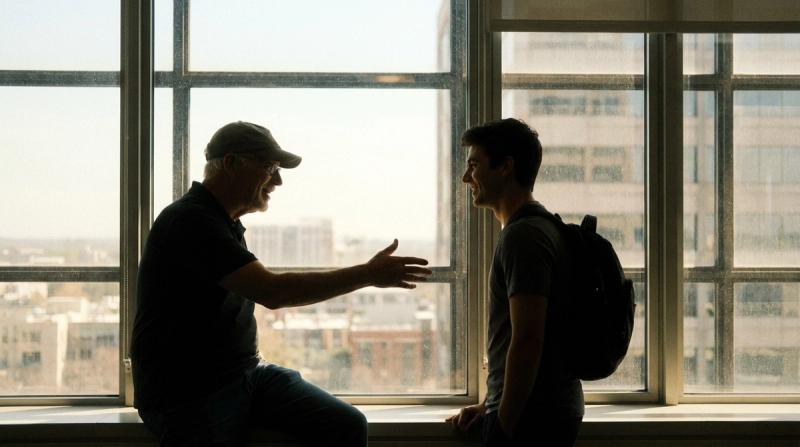
Those first years, Warren would call me into his office for no reason anybody could see, and just talk. About the business, sure, but mostly about people. He told me the whole company had walked past him that morning because they'd trained themselves to always have somewhere more important to be than wherever they actually were. 'Don't ever get good at that,' he said. 'It's the easiest skill in the world and it costs you everything.' I've tried to mind him on it. Some days better than others.
Warren passed a couple years back. I gave part of the eulogy. I run a good chunk of his company now, and I still walk the last three blocks most mornings, past the exact spot, and I still stop for the person on the ground. Every time. I don't even do the four seconds of math anymore. Warren cured me of the math.
People hear this and they say I got lucky, that it happened to be his company, what are the odds. And sure. But I think about it different. I didn't stop because he was somebody. I stopped when he was nobody. When he was just a gray old man on the concrete that a whole city decided it could step around. That's the only part that was ever mine. Everything after that was just Warren, paying attention, the way apparently he always did.