We lost my mother in her sleep, three days before her seventy-first birthday. My brother Marcus gave the eulogy. Of course he did. He was always the one who knew precisely the right thing to say at the right moment, in front of the right people.
She had spent thirty years as a schoolteacher before she retired. The sort of woman who remembered every pupil's name for decades and sent birthday cards well into their adulthood. To everyone outside our family she was endlessly warm and endlessly patient. Inside our family, I always sensed a tiredness underneath that warmth that I never quite understood. Not until the week after she died, at any rate.
I stood at the back of the crematorium, the way I always seemed to stand at the back of everything in our family, and watched people queue up to embrace him and tell him what a wonderful son he had been.
Now, growing up, Marcus was the golden child and I was, by comparison, the difficult one. He got the benefit of the doubt, the extra chances, the forgiveness that never needed asking for. I got asked why I couldn't be a little more like my brother. It stung for years, and eventually I simply accepted it as the shape of our family and stopped fighting it. I moved to the other end of the country in my late twenties partly, if I am honest, just to stop feeling that comparison every single Christmas.
The Woman in Black
Afterward, as the crowd thinned, a woman I did not recognise approached me. Sixty or so, dressed sharply, with the sort of composure that told me she was not merely a neighbour who had wandered in.
"You're Claire," she said. It was not a question.
"Yes. I'm sorry, have we met?"
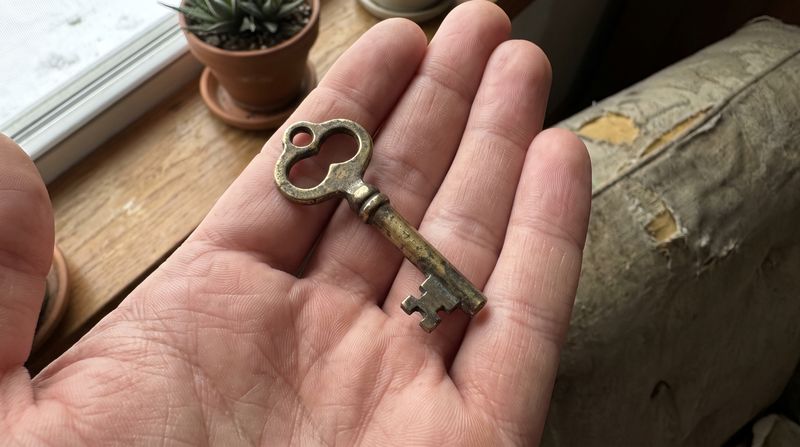
She pressed something small and cold into my palm and closed my fingers round it before I could look down. A key.
"Your mother wanted you to have this," she said, with a glance toward Marcus, who was still surrounded by mourners near the flowers. "The storage place out on the ring road. Unit 214. Go alone. Go soon. Before your brother finds out it exists."
"Wait, who are you? What is this about?"
She was already stepping back into the crowd. "Ask your mother's solicitor about Eleanor Voss, if you want the whole story. But go to that unit first. She wanted you to see it with your own eyes before anyone explains it to you."
I stood there in my black dress, holding a key to heaven knows what, watching my brother accept condolences like a man collecting a debt he believed he was owed.
The Ring Road, Unit 214
I did not sleep that night. At six the next morning I got in my car and drove out to the ring road alone, my hands tight on the wheel the entire way.
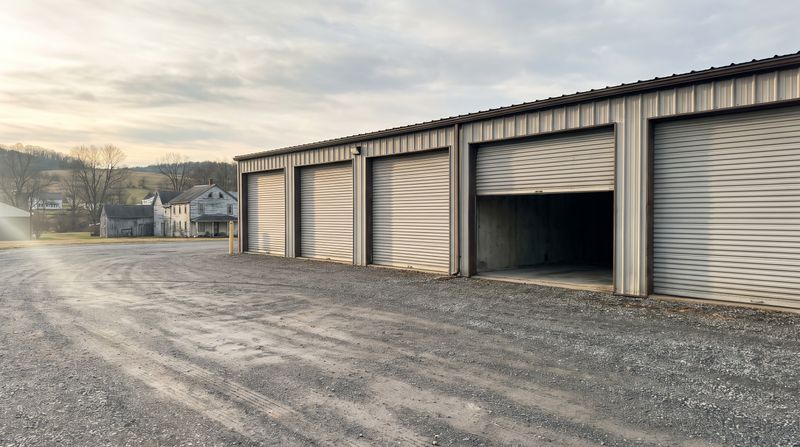
The storage facility was the sort of place I had driven past a hundred times without ever noticing. Rows of identical metal doors, quiet but for a distant motorway hum. Unit 214 was near the end, the paint on its door slightly more faded than the others, as though it had been visited more than once over the years.
My hand shook so badly it took three attempts to get the key into the lock. Part of me expected nothing. Some misunderstanding, an empty unit, an explanation that made the whole strange morning feel silly. And part of me already knew, somewhere underneath, that whatever was behind that door was going to matter.
The door rolled up with a metallic groan. Inside, stacked neatly on shelves, were boxes labelled in my mother's handwriting. Bank statements. Folders. And on a small desk near the back, an old laptop and a leather journal with my name written on the first page.
Twenty Years, Explained
I sat straight down on the concrete floor and started reading, because what I saw explained twenty years of my life in a single glance.
My phone buzzed twice while I sat there. Marcus, asking whether I had seen his sunglasses at the funeral, something entirely unimportant, and it struck me how easily he moved through the world assuming everything would simply be handled around him. I did not answer. I was not ready to hear his voice yet.
The bank statements showed transfers. Not small ones. Over eighteen years, my mother had been paying off gambling debts for Marcus, again and again, sometimes tens of thousands of pounds at a time. Betting accounts. Collection letters. A second mortgage she had taken out on the house when I was twenty-three, one she never told either of us about.
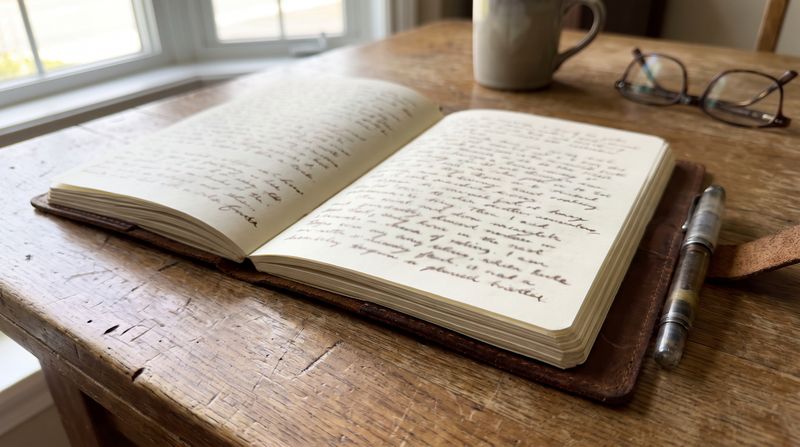
And in the journal, in her handwriting, was the part that broke me.
I let Claire believe she was the difficult one, the distant one, because it was easier than telling her the truth about her brother. I was ashamed. I thought I was protecting this family by keeping his failures a secret. I only realise now how much it cost her to be blamed for staying away from a house full of lies she never got to see.
Eleanor Voss
I rang my mother's solicitor that same morning, still sitting on the floor of that storage unit. When I said the name Eleanor Voss, there was a long pause on the line.
"Your mother came to me four years ago," the solicitor told me. "She wanted to protect part of her estate so Marcus couldn't drain it the way he had drained her savings for years. Eleanor was an old university friend. She helped your mother set up a separate trust in your name only. Marcus doesn't know it exists. Your mother was terrified of what would happen at the will reading if he found out before you understood why."
I asked her the question that had been sitting in my throat since the crematorium. "Why didn't she just tell me any of this while she was alive?"
"Shame is a strange thing," the solicitor said quietly. "She was more afraid of you thinking less of your brother than she was of you thinking less of her."
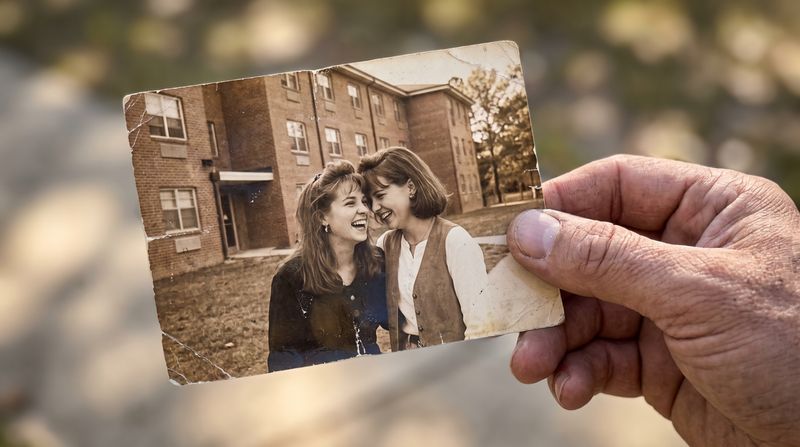
I met Eleanor Voss in person a few days later, in a small café near the courthouse. She brought an old photograph of her and my mother in their twenties, arms slung round each other outside a halls of residence, both of them laughing at something long lost.
"Your mother was the strongest woman I ever knew," Eleanor told me, sliding the photo across the table. "And also one of the most stubborn. She refused to let this become a scandal while she was alive. She wanted you protected quietly, not publicly. She made me promise to see that the key found its way to you, not the solicitor's office, not a letter. She wanted you to see it with your own hands."
The Will Reading
A week later, we all sat in the solicitor's office. Marcus wore the same practised, grieving expression he had worn at the funeral. I said nothing about the storage unit. I wanted to see his face when the truth came out on its own.
The solicitor read through the trust documents calmly, methodically, listing every transfer, every debt, every rescue our mother had financed over two decades. The numbers came out into the open one by one. Twelve thousand for a gambling debt in his twenties. Nineteen thousand for a second, four years later. The second mortgage. A car loan he had defaulted on that she had cleared in full rather than let it touch his credit. I watched the colour drain out of my brother's face in real time.
"This isn't right," he said finally. "She wouldn't do this to me."
"She wouldn't do what to you, exactly?" I asked. "Write down the truth? Or finally stop covering for you?"
"You don't understand what it's been like," he snapped, and for a moment I saw something under his composure I had never seen before, something closer to fear than anger. "Everyone always expected so much from me. I never asked to be the favourite."
"She didn't do anything to you," I said, and my voice came out steadier than I expected. "She spent eighteen years cleaning up after you so quietly that I grew up thinking I was the problem in this family. She protected you from consequences for two decades, Marcus. This is the first time in your life anyone has ever let you actually face them."
She spent eighteen years cleaning up after you so quietly that I grew up thinking I was the problem in this family.
The Key in My Jewellery Box
Marcus and I do not speak much these days. That part still hurts, if I am honest, even after everything. But I no longer carry the version of myself that grew up believing I was the cold one, the difficult one, the daughter who never quite measured up.
Last Christmas was the first one I hosted at my own house instead of driving three hours to sit at a table where I always felt slightly out of place. It was quiet, just my husband and our children, and it was the calmest holiday I can remember in years. I used to think a small table meant a smaller life. I do not think that anymore.
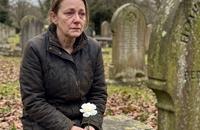
I visit my mother's grave now with a different kind of grief than I expected to feel. Not only sadness that she is gone, but a strange, aching gratitude that she found a way, even from beyond a solicitor's office and a locked storage unit, to finally tell me the truth.
Eleanor Voss sent me a card a few months later. Just one line inside.
Your mother loved you more than her own pride. It just took her a long time to prove it.
I keep that key in my jewellery box now. Not because I need it anymore. Because it is the only object I own that reminds me my mother was fighting for me the entire time, even in the years I thought she had stopped.