The call came in the middle of the morning. It was Emma's school. My seven-year-old daughter was doubled over in pain, and within the hour the A&E doctor said the word every parent dreads. Appendicitis. Emergency surgery, that same afternoon.
I rang my supervisor from the hospital corridor, my voice shaking. "I have to be here. I'm so sorry, I know we've the Kane account deadline today."
"Do what you need to do," she said. I believed her.
Now, I had worked at that firm for eleven years, since before Douglas Kane's father handed the business down to him. I had trained half the junior staff, covered accounts through two rounds of redundancies, and never once rung in sick without a genuine reason. I tell you that not to boast, but because it rather matters for what came next.
The Waiting Room
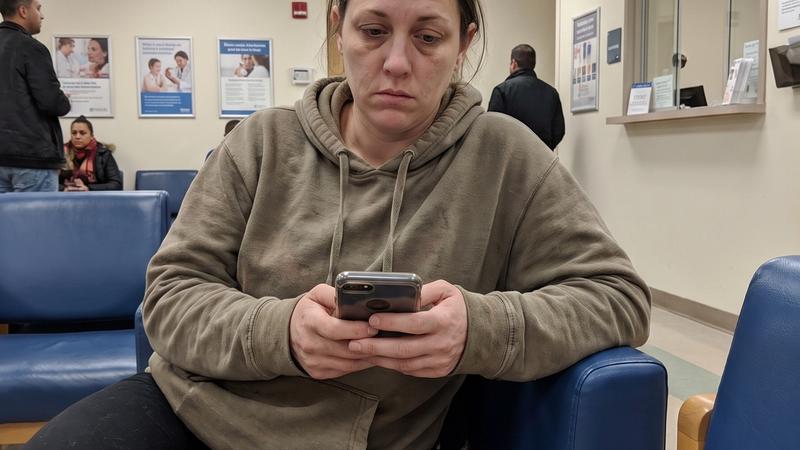
I sat in that waiting room for four hours, alone, watching the doors Emma had disappeared behind, praying harder than I had in years. My ex had moved away two years earlier and was not answering his phone. It was just me, a machine coffee going cold in my hand, and the longest four hours of my life.
When they finally wheeled her out, groggy but all right, I cried in the corridor from sheer relief. A nurse squeezed my shoulder and told me she would be right as rain within the week.
I stayed at her bedside that whole night, half asleep in a plastic chair, thinking about the deadline I had missed and telling myself it would be fine. That eleven years of showing up counted for something. I genuinely believed that. It is almost funny now, how sure I was.

The Meeting Room
I went back to work the next morning, exhausted, grateful, ready to catch up on everything I had missed. My pass would not work at the front door. I had to be buzzed in by the receptionist, who would not quite meet my eye.
Douglas Kane, the owner of the marketing firm I had given eleven years to, was waiting in the small meeting room. Not my supervisor. Him.
"We need reliability on this team," he said, sliding a folder across the table without really looking at me. "This isn't the first time you've had to step out unexpectedly. I'm sure you understand."
"My daughter had emergency surgery yesterday," I said. Just that.
"And I'm glad she's all right. But this business runs on deadlines, not sympathy."
This business runs on deadlines, not sympathy.
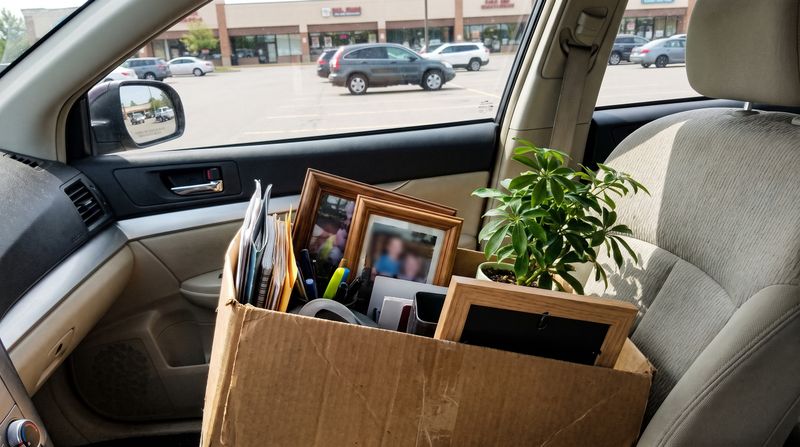
I walked out of that building with a cardboard box of desk photos and eleven years of loyalty that apparently meant nothing the moment it became inconvenient.
Eight Hundred Pounds
I sat in my car in the car park for twenty minutes before I could even turn the key. I had eight hundred pounds in savings, a seven-year-old recovering from surgery, and absolutely no idea what I was going to do next.
For the first month I applied to every marketing coordinator job within thirty miles and heard nothing back. Rejections, or worse, silence. I remember sitting at my kitchen table one night working out how many weeks eight hundred pounds would actually stretch, and the number frightened me enough that I nearly rang Douglas's office to beg for my job back. I didn't. I am still proud of that, some nights more than others.
Then a former client of the firm, a small furniture company Douglas had always treated as an afterthought, rang me directly. They had heard I was gone and wanted to know whether I would manage their social accounts freelance. Just a few hours a week.
I said yes before she had even finished the sentence.
Building Something Small
That few hours a week became a second client, then a third. I worked at my kitchen table after Emma had gone to bed, teaching myself the parts of the job Douglas's firm had always outsourced or half done. I priced myself fairly rather than cheaply, and I actually returned every phone call within the day, which I quickly learned was rarer in this industry than it ought to be.
Within six months I had five clients and a name for the business. Within a year I had an actual office (a shared space above a bakery in town) and my first hire, a university student named Priya who was sharper than half the senior staff at my old job.
Priya asked me once, a few weeks in, why I answered every single client email within the hour, even at ten at night. I told her the truth. "Because for eleven years I watched a company treat responsiveness as optional, and I watched what that cost the people who worked there. I'm not building that here."

The Kane Account
Ten months in, I got a call from a marketing director at a regional retail chain. One of Douglas Kane's oldest and largest accounts. They had grown fed up with missed deadlines and tired strategy. Someone had passed along my name.

I still remember driving to that first pitch meeting in my one good blazer, rehearsing my proposal at every red light. I won the account two days later. It was the first time since the sacking that I let myself believe this might actually work. That it might become something bigger than a kitchen table and a handful of small clients.
I won that account eleven months after Douglas let me go. It was, by billing, larger than any single account his firm had left.
"We just needed someone who actually rings us back," the marketing director told me at our first meeting, only half joking. "It shouldn't be this hard to find."
I will not pretend that did not feel good. I would be lying.
Eighteen Months Later
By month eighteen, my small agency had nine employees and a proper office with a meeting room of its own. One of the first policies I wrote into our handbook was simple: family emergencies are never held against anyone here. No exceptions, no explanations required. Priya still jokes that it is the shortest and most important page in the entire document.
We were hiring for a client strategy director, a senior role, and I had blocked off a full afternoon for interviews.
The fourth candidate on the schedule walked in wearing a suit that used to intimidate me. Douglas Kane sat down across the desk before he had even looked up from his notes to see who was interviewing him.
When he finally did look up, the colour left his face.
"I didn't realise... I didn't know this was your company," he said.
"Most people don't," I said. "Until they're sitting where you are right now."

He shifted in his chair, and his eye caught the framed photo of Emma on my desk. The one from her school photo day, taken three months after her surgery, gap-toothed and grinning. I saw him notice it. I saw him remember.
The Interview
I could have thrown him out right then. Part of me wanted to. But I had learned something in eighteen months of building this from nothing. That the version of me who needed to prove something to Douglas Kane was a great deal smaller than the version who simply wanted to run a good business.
"Your firm lost the regional retail account," I said, glancing at his CV. "And two others since, by the look of it."
"Things have been difficult," he admitted. "The industry shifted. Clients wanted more responsiveness than we were built for."
"I remember," I said quietly.
He had the decency to look down at that. "For what it's worth," he said, "firing you the way I did was wrong. I've had a long time to think about it."
Firing you the way I did was wrong. I've had a long time to think about it.
What I Decided
I did not hire Douglas Kane. Not out of spite, though I will not pretend the thought did not cross my mind. I hired someone else, a candidate with less of a name but exactly the sort of steady reliability my clients actually needed. The very quality Douglas had once claimed to value, and then punished me for, the one time it truly mattered.
But I did walk him to the door myself, and I told him something I meant with my whole heart.
"I hope you find something that fits you," I said. "I really do. But I built this company on the idea that people matter more than deadlines. I'm not going to stop now."
He shook my hand on the way out, and for the first time in the eleven years I had known him, he looked like a man who understood something he had never bothered to learn before.
Emma is nine now. Healthy, and fond of telling people her mum owns a company. Some nights I still think about that meeting room, the folder sliding across the table, the eight hundred pounds in my account and how impossibly small that number felt at the time. I think about the version of me who sat in her car in that car park, terrified, with no idea any of this was ahead of her.
It turns out the worst day of my career was the exact shove I needed toward the best thing I have ever built. I would not wish that morning on anyone. But I would not trade what came after it for anything either.