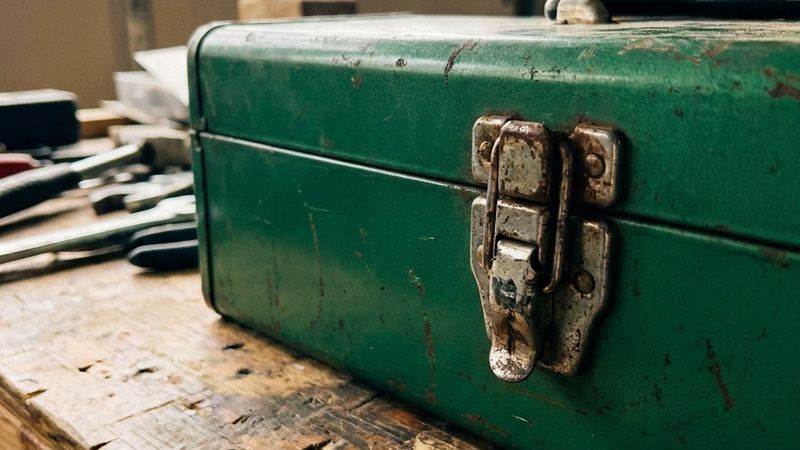
There's a green toolbox on my workbench right now. Steel. Dented all down one side. The latch still sticks, so you have to thumb it up and to the left, a little trick my father knew and now my brother and I both know again.
For fifteen years that toolbox was the wall between me and the only brother I've got. This is how it got there, and how it finally came down. I'm telling it because I think there are more families like mine out there than anybody admits at Thanksgiving.
The Man and the Box
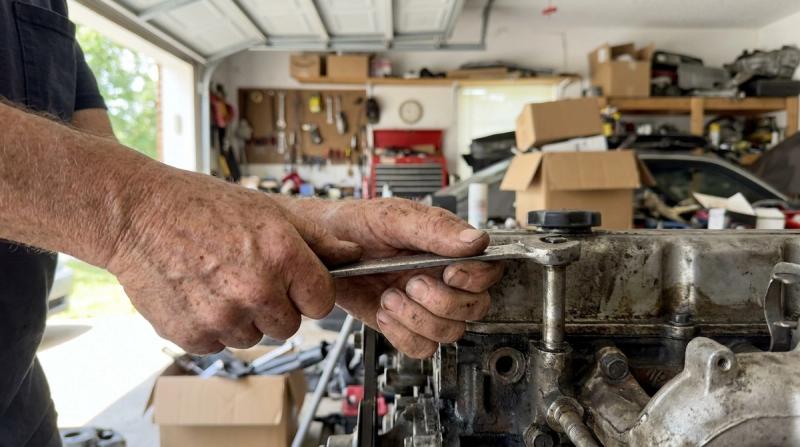
My dad, Raymond, was a fixer. Not a talker, a fixer. He worked at the plant most of his life, but the real man came out on evenings and weekends, when the neighbors would come up the driveway with a lawnmower that wouldn't start or a screen door hanging off its hinge.
He never charged anybody. He'd just get the green toolbox down off the shelf, and squat down over whatever was broken, and go quiet, and forty minutes later the thing worked again. That was how he said a lot of things he couldn't say out loud. He fixed them for you.
Danny and I grew up handing him wrenches out of that box. Ten-millimeter. Flathead. The needle-nose pliers with the red handle worn down to the metal. If you grew up like we did, you know a toolbox like that isn't a toolbox. It's a whole man, boiled down into something you can carry.
Dad died the way quiet men do, without much fuss and before any of us were ready. Heart, in his chair, with the ballgame on. Seventy-one. I still think that's young. I'm creeping up on it now and I can tell you it's young.
The Day After We Buried Him
The fight happened in his garage, the day after the funeral. And I've had fifteen years to think about why, and here's the honest answer. We weren't fighting about the toolbox. We were two grown men who had just lost their dad and had absolutely no idea what to do with all of it, and the box was just the thing standing there when the grief needed somewhere to go.
I said I should have it, because I was the oldest and I'd helped him build the workbench. Danny said he should have it, because he was the one who still lived in town and looked in on Dad every week while I was two states away being important. And he wasn't wrong about that. That one landed because it was true, and the true ones are the ones that start wars.
I said something about him always being the favorite. He said something about me thinking I was too good for this family. And then he said the one I won't print, and I said the one I won't print back, and it got very quiet.
He picked up the toolbox, and he carried it out to his truck, and he drove away. And I let him. That's the part I own. I could have walked out to that truck. I didn't. I stood in our dead father's garage and let my brother drive off, and I told myself I was the one who'd been wronged.
Fifteen Christmases
You want to know how a thing like this survives fifteen years? It survives because it becomes easier than fixing it. That's all. There's no dramatic reason. It just calcifies.
The first year, I was too angry. The second year, too proud. By about year five it had been so long that reaching out felt like it needed a big occasion, and big occasions kept coming and going without either of us being brave enough to use one.
We were both at our mother's funeral, seven years in. Stood on opposite sides of the grave. Nodded at each other like men who'd met once at a conference. My wife squeezed my hand so hard it hurt, willing me to just go say something. I didn't. I have to live with that one too. We buried our mother and didn't speak, two brothers, because of a toolbox neither of us had even opened.
My daughter grew up asking about her uncle Danny. Where he was, why he never came around, whether he'd done something bad. And I never had a good answer, because the true answer was that her father and her uncle were too proud to pick up a telephone, and you can't hand a kid a sentence like that and have it land as anything but what it is. So I'd mutter that he was busy, that he lived far off, and change the subject. She quit asking around twelve. That's its own kind of loss, by the way. When a child stops asking a question because she's worked out the grown-ups don't have an answer they're proud of.
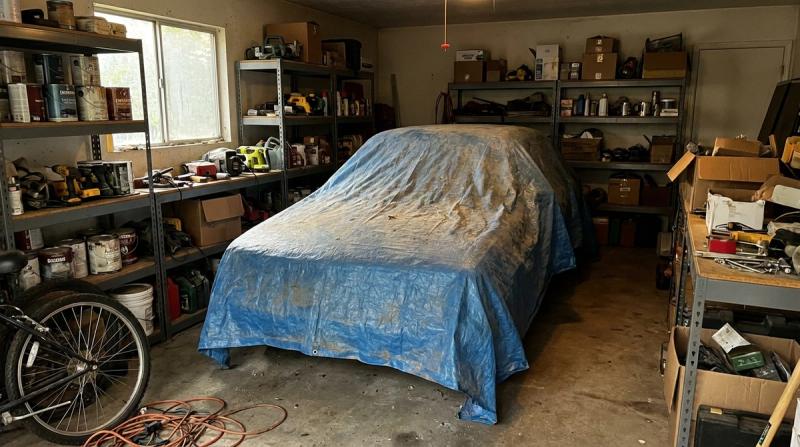
Because that's the thing I found out later. In all those years, Danny never once opened it. It rode in his truck, and then it sat in his garage under a blue tarp, and he never lifted the lid. He told me he couldn't. He said opening Dad's toolbox by himself felt like reading somebody's mail. Like it was a two-person job, and he only had one of us.
So we each spent fifteen years guarding a wound, and the thing at the center of it just sat in the dark, waiting for us to grow up.
The Knock on the Door
This past spring, on an ordinary Sunday, somebody knocked while I was watching the same kind of ballgame my dad died in front of. I opened the door and it was Danny.
I almost didn't know him for a second. He'd gone gray. He was heavier, slower, older than Dad ever got to be, and I realized with a jolt that so was I, that we'd handed each other's middle age to the silence and gotten nothing for it.
He had the toolbox in his arms. He looked at me, and his chin was doing the thing our father's used to do right before he had to say something that cost him. And he said, "Mark. I got my scan back Thursday. It's not good. And I'll be damned if I'm going to die having not talked to my brother over a box of wrenches. I think it's time we opened this. Together."
There was no speech worthy of the moment. I just stepped back and held the door, the way you do, and my kid brother carried our father's toolbox into my house, and we set it on the kitchen table like it was made of glass.
The False Bottom
We opened it together. Both of us with a hand on the lid, thumbing the latch up and to the left, the little trick, and I swear to you I felt him in the room.
It was just tools, at first. His wrenches, laid in the order he laid them. The red-handled pliers. A carpenter's pencil worn to a nub. The smell came up out of it, oil and metal and something that was just him, and Danny made a sound I hadn't heard a grown man make, and I wasn't far behind.
And then Danny lifted out the top tray, and under it, in the bottom of the box, there was a piece of the metal floor that didn't sit right. A false bottom. Dad had cut a panel and set it in there, and none of us ever knew, because why would you go looking under a man's wrenches.
Underneath it was an envelope, yellowed, with two words on the front in our father's blocky all-caps handwriting. TO MY BOYS.
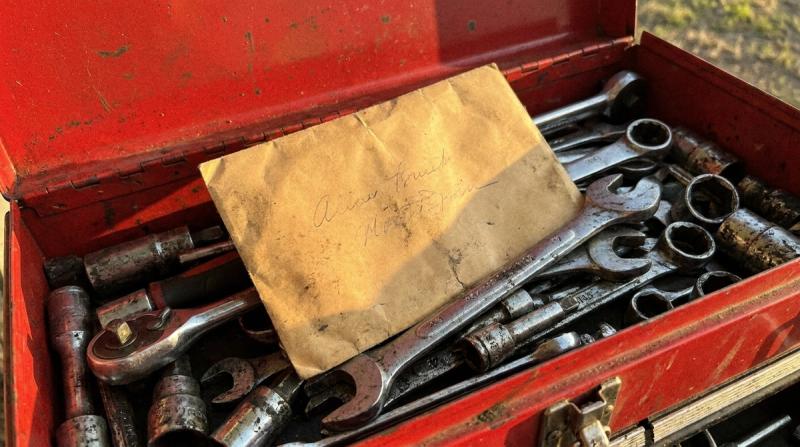
Danny's hands were shaking too hard, so I read it. And I'm going to give it to you the way he wrote it, because I've read it a hundred times since and I still can't get through it clean.
"Boys. If you're reading this, I'm gone, and you finally opened the box together, which means you did the one thing I was always most afraid you wouldn't. You two are the same stubborn animal, God help you, you got it from me. Whatever you're fighting about by the time I'm gone, and you'll be fighting about something, I know you, it is not worth one single Sunday you don't get back. Split the tools. Or don't. I truly do not care who gets the pliers. I only ever cared that you had each other after I couldn't be here to fix things for you. So consider this the last thing I'm fixing. Now shake hands. Dad."
He Knew Us
That's the part that takes the legs out from under me. He wrote that years before he died. He put it under a false bottom he built with his own hands, betting, correctly, that his two boys were exactly stubborn enough to go a stretch without speaking, and exactly sentimental enough that we'd never open his toolbox apart.
He booby-trapped his own toolbox with forgiveness. He knew if he made the letter a two-person job, and hid it deep enough, that one day we'd have to be standing shoulder to shoulder to ever find it. And he was right. It took us fifteen years to be dumb enough and finally sad enough to get there, but he was right.
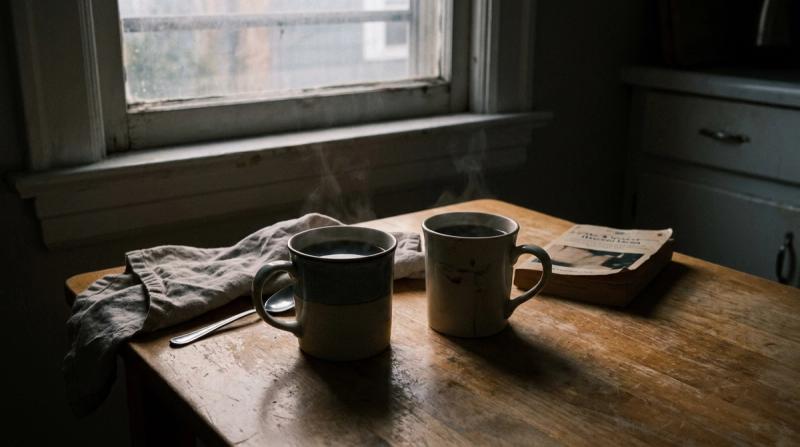
Danny and I sat at my kitchen table until it got dark, and we didn't turn the lights on, and we talked. Really talked, for the first time since we were young men. About Dad. About Mom's funeral, and how bad we'd both felt, each of us sure the other one didn't. About fifteen years of Christmases we threw in the garbage over pride.
What We've Got Left
Danny's sick. I'm not going to dress that up. The scan was what he said it was, and we are in a fight now that we're going to lose, together this time, which is the only mercy in it.
But I've got my brother back for whatever's left, and that's more than I had in April, and I'll take it. He comes over most Sundays. We work on stuff in the garage, little jobs, a neighbor's mower, a busted hinge, the way Dad taught us, handing each other wrenches out of the green box. We don't talk a whole lot while we do it. We don't have to. That was never how the men in my family said the big things anyway.
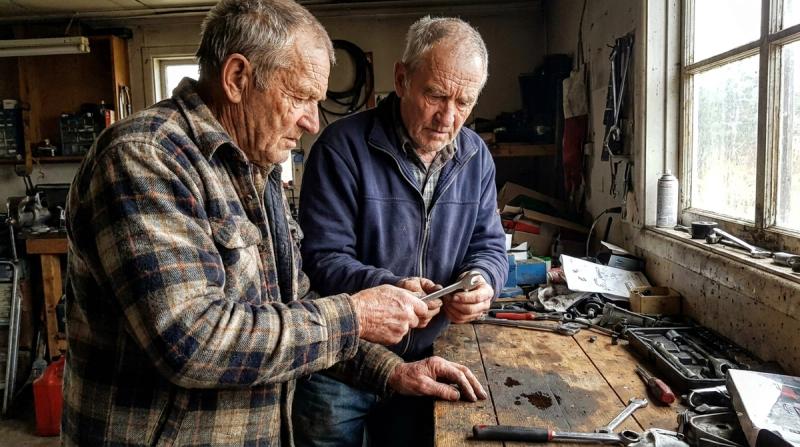
The toolbox lives on my bench now, and when we're gone it'll go to Danny's oldest, and I've already told that kid the one rule that comes with it. You don't open it alone. You wait until you're standing next to somebody you love, and you thumb the latch up and to the left, and you remember that your great-grandfather was a quiet man who spent his whole life fixing things, and saved the most important repair for last.