The day our daughter came to live with us, she was eight years old, she owned everything she had in a single grocery bag, and she had not spoken a word out loud in over a year.
Her name is Lucía. The people who handled her case used words like selective mutism and trauma response, careful clinical words that never once reached the small, watchful girl standing in our doorway, holding that grocery bag against her chest like a shield she had learned to carry.
She was not deaf. She could hear everything, and I mean everything, the way children who have learned to survive by listening can hear a mood change three rooms away. She simply did not speak. Not to us, not to the doctors, not to the gentle caseworker who drove her to our door. Somewhere in her short, hard life she had built a wall of silence around herself, and at eight years old, she lived behind it.
The Language Without Words
My husband Marco and I had waited nine years to become parents. Nine years of hoping and losing and hoping again. We had promised each other, on the drive home from the agency, that we would let this child come to us at whatever pace her heart could manage, and that we would not ask her for a single thing she was not ready to give.
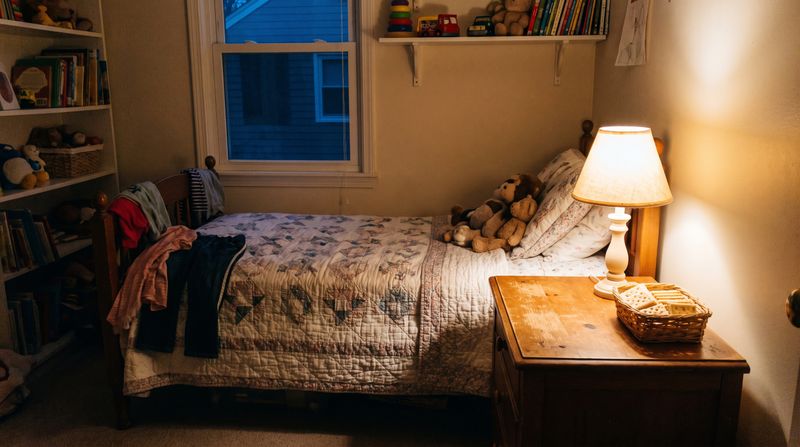
So we did not push. We made her a room with a soft yellow lamp because she was afraid of the dark, though she never said so, she just stood very still in the doorway of the dark room until I understood. We learned to read her small signals. A nod. A shake of the head. A finger pointing at the cereal she wanted, or the shirt, or the crayon.
It is a strange thing, to parent a child in a language with no words in it. You become fluent in the smallest gestures. You learn that a certain tilt of her head means she is tired, and a certain stillness means she is frightened, and that when she stands close enough for her shoulder to just barely touch your arm, that is Lucía saying she loves you in the only alphabet she has left.
The Things We Noticed
We noticed things. When you cannot talk to a child, you watch her instead, and Lucía told us a great deal without ever opening her mouth.
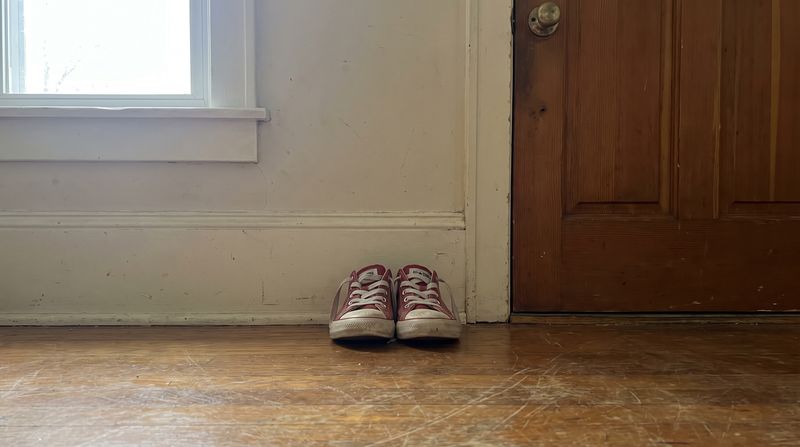
She lined her shoes up by the door every single night, perfectly straight, the toes touching the wall, as if a small enough and tidy enough girl might be allowed to stay. She flinched, hard, if a plate clattered too loudly in the sink. And she hid food. Little pieces of bread, crackers, half a cookie, tucked under her pillow, in case, I came to understand, the food ever stopped coming, the way it must have stopped before.
The first time I found the bread under her pillow, I sat on the floor of the hallway afterward and cried where she could not see me. Then I dried my face, and I started leaving a small basket of crackers on her nightstand every night, so she would never have to hide them again. She never said thank you. She did not have to. The lining-up of the shoes got a little less precise after that, and I understood that too.
Three Months of Silence
Three months passed like that. Autumn came in over the hills the way it does in south Texas, slow and gold and hardly cooler. Three months of a silent little girl and two parents loving her in a language without any words in it.
I would be lying if I said I was not frightened sometimes. Late at night I would ask Marco, in a whisper, what if she never speaks, what if we are not enough, what if whatever happened to her is bigger than all the love we have. And Marco, who is a calmer soul than I will ever be, would say the same thing every time.
She is not silent because she is broken. She is silent because she is waiting to be sure. Let her be sure.
So I tried to let her be sure. Every morning I made her breakfast and I hummed while I did it, the old songs my own mother used to hum, and I set her plate down without a word, and I let the kitchen be a warm and safe and ordinary place, morning after morning after morning.
The Wednesday
It was an ordinary Wednesday. I remember because there was nothing special about it at all, which is how the biggest moments of a life so often disguise themselves.
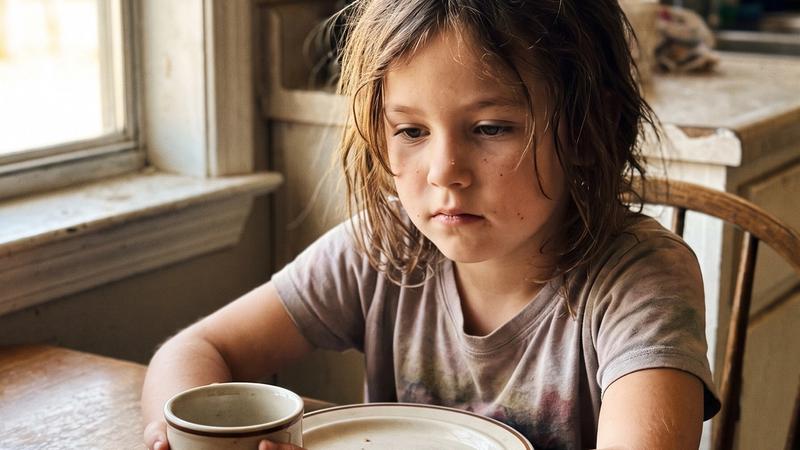
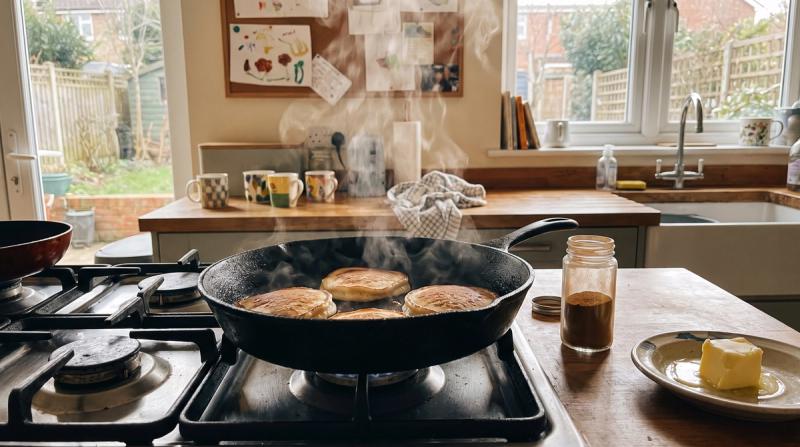
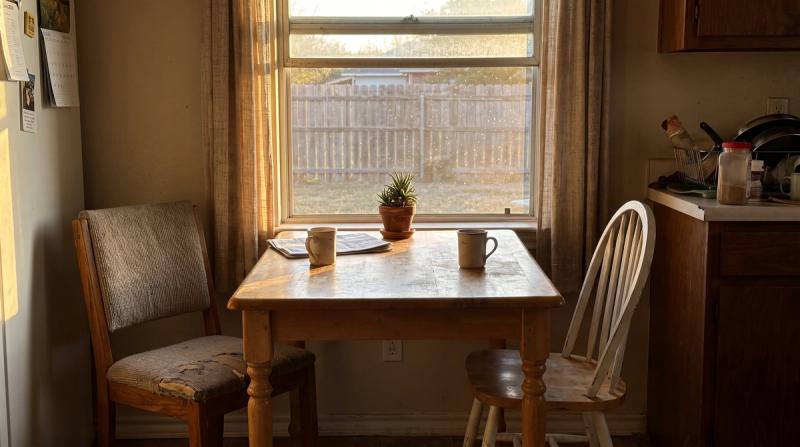
I was making pancakes. The kitchen smelled of cinnamon and warm butter, that smell that means safety if you are lucky enough to have learned it means safety. Lucía sat at the table in her school clothes, swinging her feet, watching me the way she always watched, carefully, from behind her wall.
And then, in a voice I had never heard in three months, a small rusty voice like a door that has not been opened in a very long time, Lucía spoke.
"Miss Sofia?"
I set down my coffee. Very carefully, because my hands had started to shake, and I did not want to frighten her by falling apart. I held on to the edge of the counter. I said, as gently as I have ever said anything in my life, "Yes, mija?"
The Question
She looked down at the table. Her small hands were folded very tightly. And she asked me the question she had been holding inside her wall of silence for over a year.
"If I tell you something true," she said, "will you take me away? Because last time I told something true, they took me away."
I want you to sit with that for a moment, the way I had to.
My daughter had not stopped speaking because she was broken. She had stopped speaking because, somewhere in her short life, she had told the truth about something happening to her, some grown-up she had trusted enough to tell, and the result of her telling the truth was that her entire world came apart and she was carried away from everything she knew. In her eight-year-old logic, the lesson was terribly simple and terribly clear.
Her words had cost her everything. So she had stopped using them. She had gone silent to keep herself safe, and to keep from ever again saying the true thing that made the people disappear.
She had gone silent to keep herself safe. In her mind, her own voice was the thing that had taken her mother away.
I came around the counter and I knelt down beside her chair, so that I was looking up at her instead of down, and I waited until she met my eyes.
"Lucía," I said. "You can tell me anything that is true. Anything at all. There is no true thing in the whole world that would make me take you away, or send you back, or love you even a little bit less. Telling the truth did not take you away, mija. Grown-ups who were supposed to keep you safe did that. Not your words. Never your words."
She took a long time to answer. Then she asked, in that same small rusty voice, "Even if it's a really bad true thing?"
"Especially then," I said. "Especially then."
What She Told Me
I am not going to write here what Lucía told me at that kitchen table, because it is her story to tell one day, if she ever chooses to, and not mine to hand to strangers. It is enough to say that it was a very bad true thing, and that a braver eight-year-old than I have ever been had been carrying it alone, in silence, for over a year, because she believed her own voice was dangerous.
I held her while she told me. The pancakes burned. I did not care about the pancakes. When she was finished, she looked almost surprised to still be there, in the warm kitchen, in my arms, not taken away.
"I'm still here," she whispered, as if testing whether it was true.
"You're still here," I said. "You are always going to be still here."
The Words Came Back Slowly
The words did not all come rushing back at once. Healing is not a faucet you turn on. For a while she spoke only to me, and only in the kitchen, as if the kitchen were the one safe room where words were allowed. Then she spoke to Marco. Then, months later, to her teacher, and then, one glorious afternoon, I got a note home saying Lucía had gotten in trouble for talking too much in class, and I framed that note, I actually framed it, because it was the most beautiful sentence I had ever read.
She still lines her shoes up by the door some nights, when she is anxious. She probably always will, a little. We carry the shapes of the things that happened to us. But the crackers on the nightstand went untouched one week, and then she asked me to stop leaving them, because, she said, "I know the food doesn't stop here."
I know the food doesn't stop here.
The Second Question
Lucía is eleven now. Loud, funny, fierce, a girl who argues with me about bedtime and sings badly and at great volume in the shower. Sometimes I stand in the hallway and just listen to her make noise, all that beautiful noise, and I think about the silent child in the doorway with the grocery bag, and I can hardly believe they are the same person.
About a year after that Wednesday, she asked me a second question, at the same kitchen table, over the same cinnamon pancakes.
"Can I call you Mom?" she said. "Or is that only for the kids who get to keep their moms?"
I set down my coffee again. I have learned to set it down carefully whenever Lucía has a question, because her questions have a way of landing right in the middle of me.
"You get to keep this one," I told her. "For good. So yes. Yes, mija. You call me Mom."
People ask me sometimes if it was hard, those first silent months. If I ever doubted. And I tell them the truth, which is that the silence was never the hard part. The hard part was knowing that somewhere behind that wall was a little girl who believed that loving her out loud might make her disappear.
So we loved her quietly, in a language without words, morning after morning, cinnamon and yellow lamplight and crackers on a nightstand, until she was sure enough to use her own voice again.
She calls me Mom now. She says it a hundred times a day, mostly to ask for things, the way children do, and every single time, some small piece of me sets down its coffee and holds on to the counter, and gives thanks for the ordinary Wednesday when a silent little girl decided, at last, that it was safe to be heard.