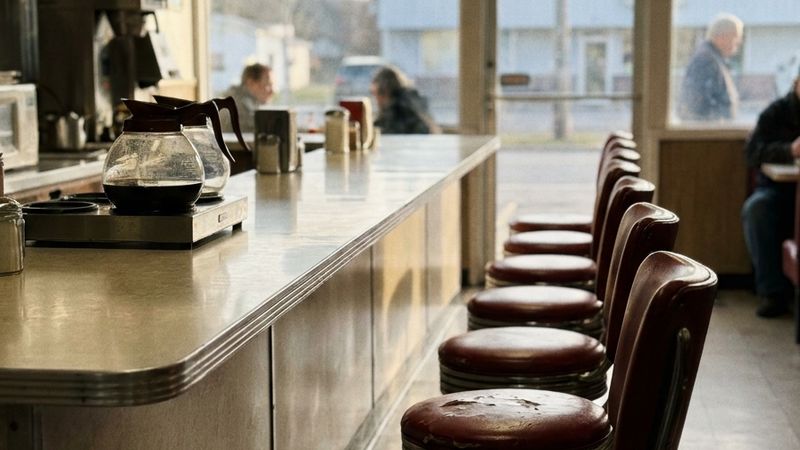
I've run the same diner off a state highway for going on thirty years. You see a lot of people from behind a counter. Most of them pass through. A few of them, you keep, without ever really deciding to.
Earl was one I kept. Even now, a year on, I still look at booth nine at seven in the morning, and some part of me expects to see him there, facing the seat where nobody sat.
Seven O'Clock, Every Day
He came in the first time about nine years ago. Ordered two eggs over easy, wheat toast, coffee black. Sat in booth nine, by the window. And then he did the exact same thing the next day. And the next. And I stopped counting somewhere in there, because it just became a fact of the morning, like the coffee brewing and the sign flipping to open.
Earl. Tall, thin, always in a pressed collared shirt even though nobody was making him. Hair combed. A watch that looked older than me. He had a real dignity about him, the kind some men from that generation carry that you don't see much anymore.
And here's the thing I noticed early and never understood. He always sat facing the empty side of the booth. Always the same side, looking at the seat across from him like he was waiting on somebody. And nobody ever came.
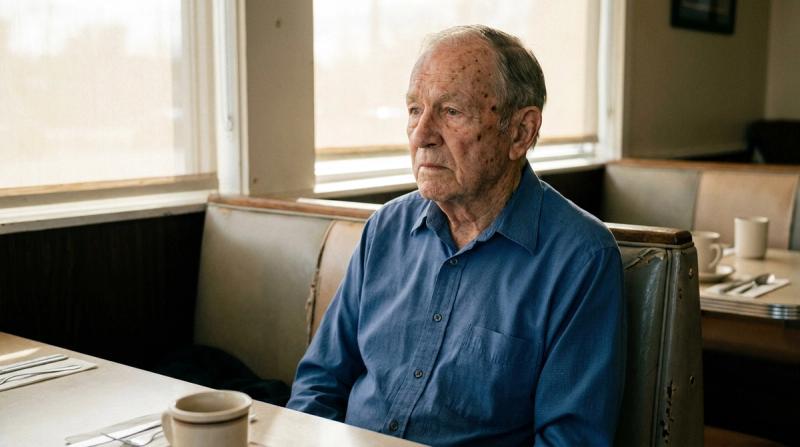
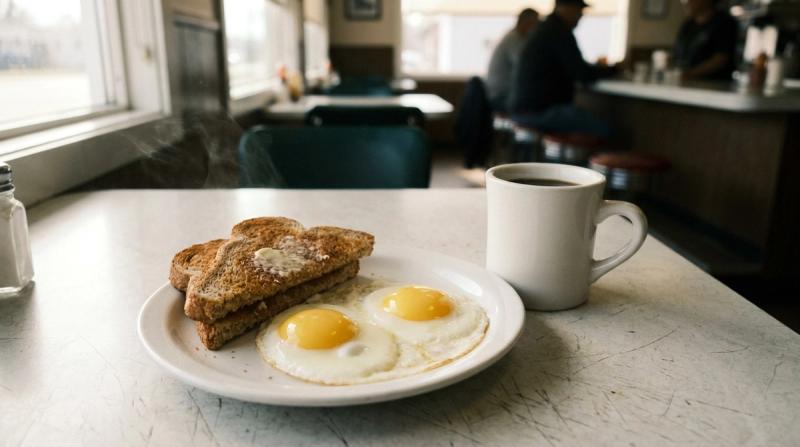
One time we were packed, a tour bus had dumped forty people on us, and I asked Earl real nice if he'd mind taking a stool at the counter just for the one morning. And the look on his face. Like I'd asked him to give up something that mattered a great deal. He said he'd rather keep his booth if it was all the same to me, and I said of course, Earl, of course, and I never asked again. After that, booth nine was his. My staff knew. You did not seat anybody in booth nine before seven-thirty. It was Earl's.
Casey
I had a waitress back then named Casey. Twenty-two, twenty-three. Working her way through nursing school the hard way, no help from anybody, pulling doubles for me and then going to class on no sleep. Good kid. The kind who's tired in her bones and still asks how your day's going and actually means it.
Casey adopted Earl, more or less. She warmed his little jams because she figured out his hands didn't do so well with the cold packets. She kept his coffee full without him ever having to raise a finger. And on the slow mornings, she'd slide into the other side of booth nine, the empty side, and give her feet a rest, and just let the old man talk.
He didn't talk much, but when he did it was to her. She's the one who found out his wife's name was Margaret. That he'd been an engineer. That he didn't have any kids. Little pieces. She never pushed. She just made room for him, the way some people know how to do and most of us never learn.
I'll be honest, I didn't think a whole lot about it at the time. I had a business to run. Earl was a fixture, Casey was sweet to him, and that was a nice thing in a hard world, and I left it there. I didn't ask the one question I should've asked. Why the empty seat, Earl? Why booth nine? I figured a man's business was his own. I still think that's mostly right. But I do wish I'd known him better while I had the chance.
The Morning He Didn't Come
Nine years he never missed a day. Christmas. The Fourth of July. A blizzard one February where I nearly didn't open and Earl came trudging in through the snow in his good coat, and I made him his eggs and sat with him myself, and we watched the plows go by.
There was one thing about that blizzard morning I only understood much later. It was just the two of us in the whole place, and weather makes people talk, and Earl looked out at the snow coming down and said, quiet, out of nowhere, 'Margaret loved a storm. She'd have had us both out walking in it.' And I said, that's nice, is Margaret your sister? And something crossed his face, and he said, 'No. She was my whole life.' And then he went back to his eggs, and I had a griddle going, and I let it drop. Nine years of little moments like that, and I let every one of them drop.
So when seven o'clock came around one morning and booth nine was empty, I felt it in my stomach before my head caught up. Casey did too. We kept looking at the door. Eight o'clock, nothing. By nine we both knew, without saying it, and neither of us said it, because saying it would make it true.
He'd passed in his sleep. Eighty-four. A neighbor found him. Peaceful, they said, which is the word people use and I hope for once it was true.
We put a little folded card on booth nine that whole next week. Reserved. Nobody sat there. Casey cried in the walk-in cooler on her break and came out and worked her whole shift with red eyes and a straight back, and I've never been prouder of an employee in my life.
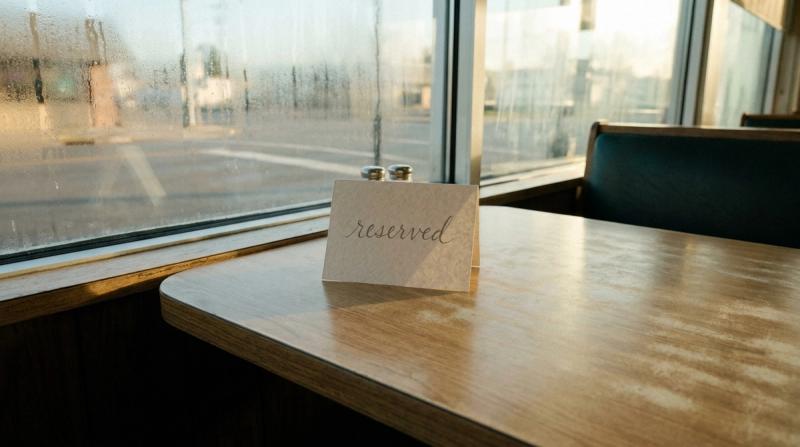
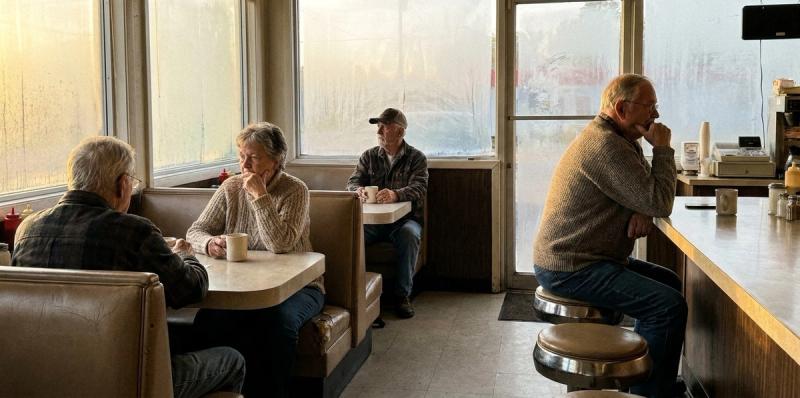
We did a small thing for him at the diner that week. It wasn't planned, exactly. A few of the other regulars heard, and they just started turning up around seven, Earl's hour, and sitting near booth nine with their coffee, not saying a whole lot. The trucker who rolls through on Thursdays. The two nurses coming off the overnight. None of them really knew Earl either, just knew him the way you know a face you've nodded at for years. And it turned out that was enough to fill a diner at seven in the morning to say goodbye to a man most of us had never once had a proper conversation with.
The Lawyer in Booth Nine
A month or so after the funeral, a soft-spoken man came in one afternoon and asked for me by name, and for Casey. He sat himself down in booth nine, which gave me a funny feeling, and he said he was Earl's attorney, and that Earl had left some instructions that involved the two of us.
And then he told us the thing none of us had known for nine years.
Earl and Margaret had come to this diner every single morning for the better part of forty years. Long before it was mine. They'd sit in booth nine, the two of them, and split the paper, and have their eggs, and start the day together. Booth nine was their booth. Forty years of mornings.
Margaret had died nine years ago. Nine years. The exact stretch of time Earl had been coming in alone.
He hadn't been able to bear eating breakfast without her. So he'd kept coming. Same booth. Same order she'd have teased him for never changing. And he sat on his side, facing her side, the empty seat, because for one hour every morning, in the one place they'd been happiest, he could pretend she was just up getting more coffee. He came for nine years so that he would not have to eat alone. Or rather, so that he could eat alone in the one place where it didn't feel like it.
"He told me once," the lawyer said, "that booth was the last place on earth he could still feel her sitting across from him. He said a man could go a whole day starved for that, and get it back for one hour over eggs, and that it was worth every morning."
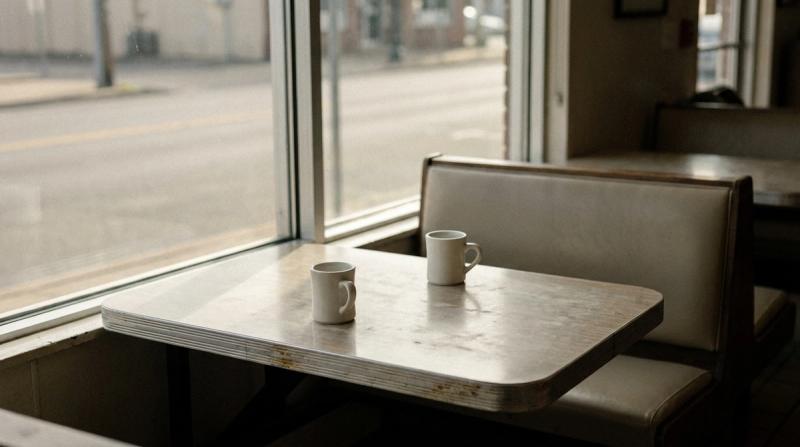
And then I understood the two cups. All those years, Earl asked us to pour a second coffee before he even started, and set it across the table on the empty side, and he never touched it. I'd figured he just liked a backup. Casey figured maybe his hands wanted the warmth. It was hers. Every single morning for nine years, he had us pour Margaret a coffee and set it in her seat, and he sat with it, and when he was done he'd slide it back and tell us we could take it now. Two cups, every day, and not one of us ever thought to ask why.
What He Left
Then the lawyer turned to Casey. And he told her that Earl had left her the entire remaining cost of her nursing degree. All of it. Paid in full, plus enough to keep her from working herself half to death through her last year.
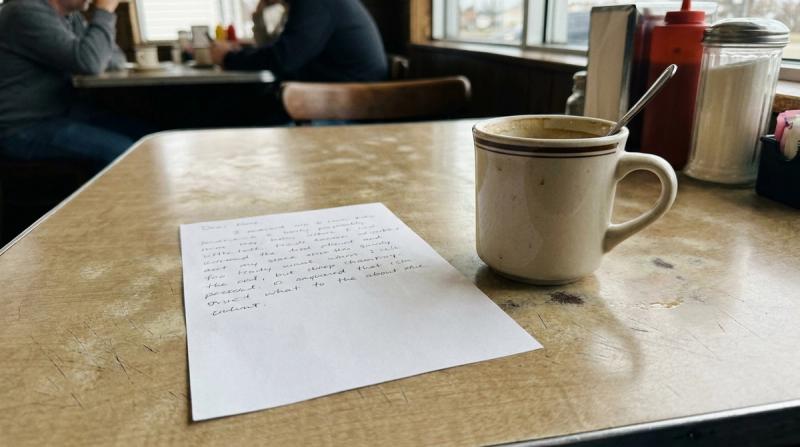
Casey put both hands over her mouth and couldn't say a word. And the lawyer handed her a note, in Earl's hand, and she couldn't read it, so I did, and I'll give it to you the way he wrote it.
"Casey. For nine years you sat in Margaret's seat and kept an old man company, and warmed his jam, and never once asked him to hurry up and finish. You reminded me of her at your age, kind to people who couldn't do a thing for her. She would have adored you. Finish your schooling. Go be a nurse and sit with people who are frightened, the way you sat with me. That is the whole of my thanks. Earl."
Booth Nine Now
Casey's a nurse now. Peds ward, two hours from here. She sends me a card at Christmas, and every one of them says the same thing at the bottom, that she thinks about Earl every time she sits with a scared kid, which I'd say means the old man knew exactly what he was doing.
I put a little brass plate on booth nine. It just says, For Earl and Margaret, who never missed a morning. Most folks who sit there never notice it, and that's fine. It's not for them.
Here's the thing I keep coming back to. For nine years I served a man his breakfast and thought I knew him. I knew his order. I didn't know he was sitting in the ruins of the best forty years a person ever got, holding onto an empty seat because it was the last address he had for the love of his life.
So I try to ask now. When somebody's a regular, when somebody sits funny or holds onto a booth like it matters, I try to ask. Because everybody in here is carrying a whole Margaret around with them, and you'd never know it from the eggs and toast. You just would never know.