Eleven years I played ball, and my dad never once sat in those stands. Not for a single inning. I counted, the way a kid counts the things that hurt.
So I'm going to tell you the story I believed my whole childhood, and then I'm going to tell you the true one, because it took a coach with a microphone to get me from the first to the second, and I've never been the same since.
The Empty Seat
Here's what it's like, if you never went through it. You're a little kid, and the thing you want most in the entire world is for your dad to see you do the one thing you're good at.
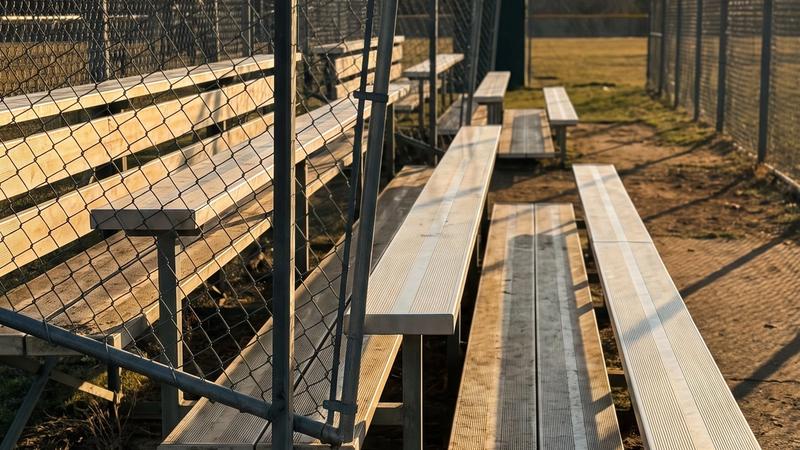
So before every game, you scan the bleachers. You can't help it. Your eyes just go up there looking for him. And every other kid's dad is up there, red in the face, yelling, embarrassing them in the way kids pretend to hate and secretly live for.
And your spot is empty. Every time. Just a patch of aluminum bench where your dad isn't.
My dad worked two jobs. I knew that, even then. Days at the plant, an hour away. Nights driving a delivery route until all hours. The man was gone before I woke up and got home after I was in bed most days. I have whole years of childhood where I mostly knew my father as a shape that kissed my forehead in the dark.
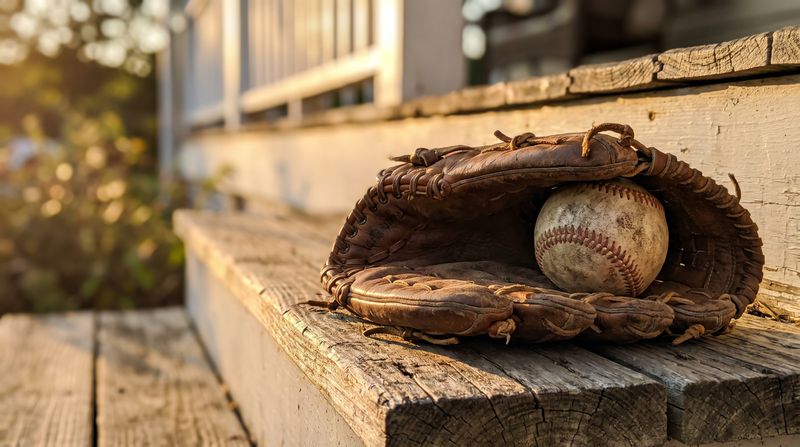
But a nine-year-old doesn't sit down and do the math on a man's schedule. A nine-year-old just sees the empty seat and writes a story to explain it. And the story I wrote, over years, in the private place where kids keep those things, was simple.
He doesn't care. Not enough. Other things matter more to him than watching me play.
I know now how wrong that was. But I believed it the way you believe things you tell yourself when you're small and hurting and nobody corrects the record.
What I Said to Him at Fourteen
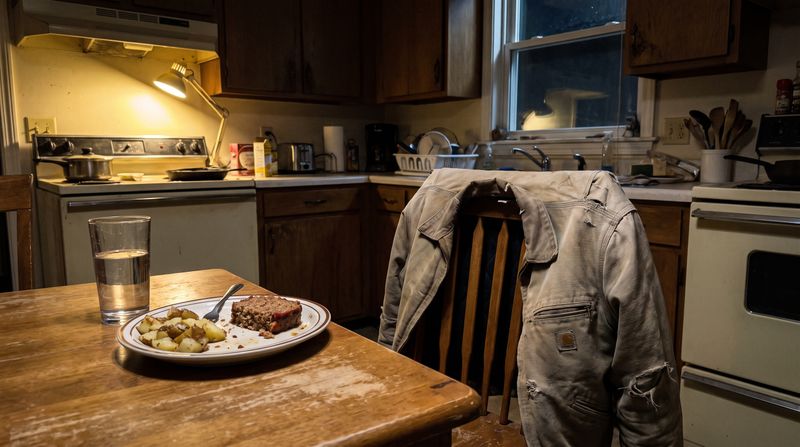
It came to a head when I was fourteen. I'd hit a walk-off double to win a big game, biggest hit of my life to that point, and I came home lit up, and my dad was at the kitchen table in his work clothes eating dinner at ten at night, and he said, "I heard you had a big game. Tell me about it."
And something in me just broke and turned mean. I said, "Why do you care? You weren't there. You're never there. You don't get to hear about it if you can't even show up."
I'll never forget his face. He didn't get angry. He just kind of folded, quietly, the way a person does when you've hit the exact bruise they were already pressing on themselves. He said, "You're right. I'm sorry, son." And he got up and scraped his plate and went to bed, because he had to be up in five hours.
My mom found me later and tried to tell me something. She said, "Baby, your father loves you more than you will ever, ever understand. There are things you don't know." And I, being fourteen and cruel, said, "Then maybe he should be here to tell me himself."
She looked at me for a long moment like she wanted to say something, and then she decided not to. I understand now that she was keeping a promise. It wasn't her secret to tell.
By senior year, I'd gone cold about it. I stopped scanning the bleachers. Stopped hoping. It's a strange kind of peace you make, where you love your dad and you've completely stopped expecting anything from him, both at once. I told myself I didn't need him in the stands. I was almost grown. I was done looking up.
The Championship
Senior year we made it all the way to the state championship. Whole town showed up. Bleachers packed. My mom was there, in her good coat, in the seat she always took.
The seat next to her, my dad's seat, was empty. Of course it was. It was a Saturday afternoon and Saturday afternoons were the plant. I didn't even look at it anymore. I'd trained myself out of it.
It was the game of my life. We were down a run in the bottom of the last inning, two outs, and I came up with a runner on. And I'll be honest with you, in that moment, some old reflex kicked in and I thought, just once, I wish he could see this. And then I shoved it down, like always, and I dug in.
And I hit the ball over the left fielder's head to win the state championship.
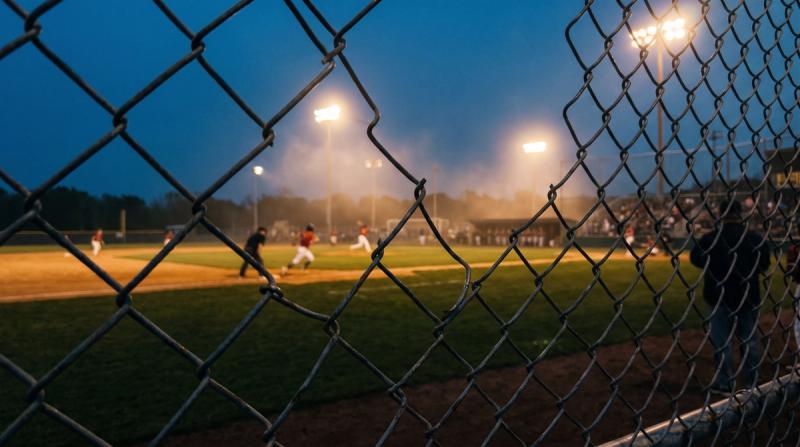
The place came apart. My teammates dogpiled me at home plate. I've never heard noise like it. Eighteen years old, state champ, on top of the entire world for about ninety seconds.
And then my coach, this gruff old guy named Coach Delgado who'd never made a speech longer than a sentence in his life, took the announcer's microphone. And he did something nobody expected.
"Come On Down"
He quieted the whole stadium. And he said, "Before we celebrate, there's somebody who needs to come down here. A man who's been at every single one of this boy's games for eleven years, and never once let him know."
I thought I'd misheard. Every game? My dad had never been to a game.
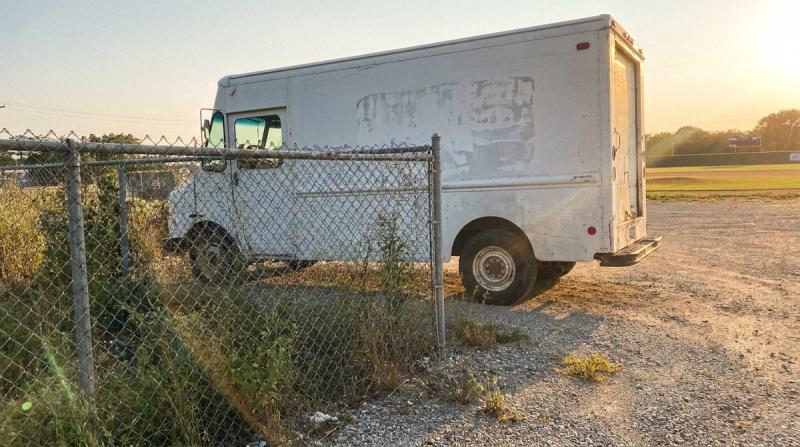
And then Coach said my dad's name, and pointed, not at the bleachers, but way out past the outfield fence, to the gravel access road where the delivery trucks and the maintenance vehicles park. And there, leaning against his delivery van in his work uniform, was my father.
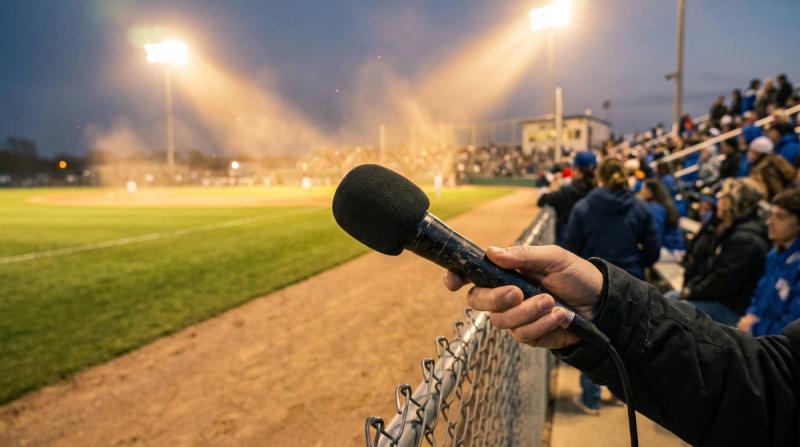
He came walking in through the outfield gate, this tired man in his uniform with his name stitched on the pocket, looking like he wanted to be anywhere but the center of that field, and Coach Delgado met him and put the microphone in his hand.
What My Dad Had Been Doing for Eleven Years
My dad is not a talker. He held that microphone like it might bite him. And then he told the whole stadium the thing my mom had been keeping for him for eleven years.
He couldn't get the time off. Not for eleven years. Not on the pay we lived on, not with two jobs, not without losing one of them, which we could not afford. He'd tried, early on, and been told no, and that was that. A man like him doesn't get to leave a shift to watch a ball game.
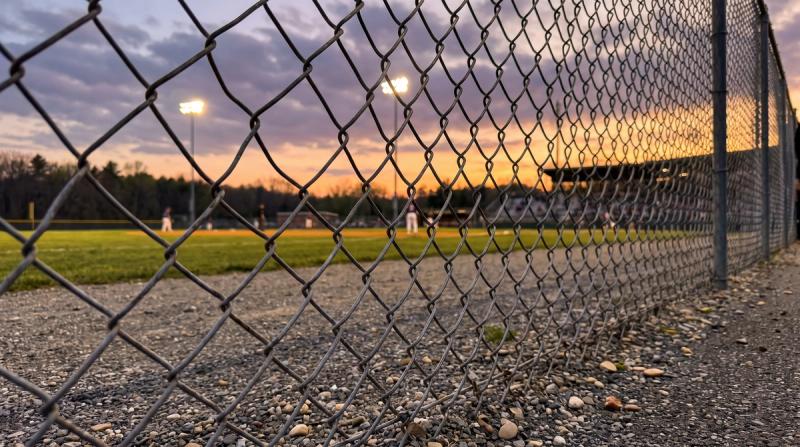
So instead, for eleven years, he'd figured out the delivery route in his head so that he could time his afternoon break, every game day, to be driving past the field. He'd park the van out on that gravel road behind the outfield fence. And he'd watch through the chain-link for however many minutes he could steal. Ten. Fifteen. Whatever the job allowed.
Then he'd get back in the van and finish his route.
"I saw a lot of your games, son. Just not from where you were looking. I was always out past the fence, where you'd never think to look for me. I'm sorry it had to be there. It was the only seat they'd let me have."
He said he'd called Coach Delgado before every game to say he'd be by the fence around the fourth or fifth inning if the route allowed, and could Coach maybe steer me out toward left field so he could get a good look. All those times I played deep in the outfield and wondered why, Coach was putting me where my dad could see me.
Eleven years. The man had watched me play from behind a fence, on his fifteen-minute breaks, and then gone back to work two jobs so I could have cleats and a glove and the fees to play at all. And I had stood in our kitchen at fourteen and told him he didn't get to hear about my games.
The Fence
I don't remember walking across that field to him. I just remember getting there, in front of the whole town, and grabbing my dad, and both of us coming apart completely.
All those years I'd stared at an empty seat in the bleachers, feeling unloved, and the whole time he'd been a hundred feet away in the other direction, watching through a fence, loving me so much he rearranged a delivery route around it for over a decade.
I'd been looking up. He'd been out past the fence. We'd been in the same place the whole time, both of us, just never looking in the same direction.
After that day, the first thing I did with my championship, before any of it, was drive out to that gravel road and stand where he'd stood. And you could see the field just fine through the chain-link. Not a great view. But you could see your kid play. You could see him, if you loved him enough to keep showing up somewhere he'd never think to look.
The Front Row
My dad's gone now. He worked those two jobs most of his life and he did not get many easy years, and I would give back every hit I ever got for one more afternoon with him. That trade isn't offered. It never is.
But I got the truth in time. That's the thing I hold onto. I got eleven years to tell him I understood, that I was sorry for the kitchen, that the empty seat had never once meant what I decided it meant when I was nine.
I've got a son of my own now. I go to everything. Every game, every recital, every nothing little event. From the front row, where he can see me.
But I also make sure, every so often, to point out to him the fence. The gravel road. The other places a person might be, when you can't find them in the seat where you're looking. Because my dad taught me that love doesn't always get to sit where it wants to. Sometimes it just shows up wherever they'll let it stand, for as many minutes as it can steal, for eleven years, and never says a word.