There's a kind of man who does a cruel thing and then tells you it isn't personal, like that's supposed to make it better. I've only met a few of them in my life. The worst one was named Prentice, and this is a story about what happened when he knocked on my door ten years after he tried to end me.
Here's the thing. I'd have told you, right up until that evening, that I knew exactly what I'd do if I ever got the chance. Turns out I didn't know myself as well as I thought.
Six Men and a Bonus
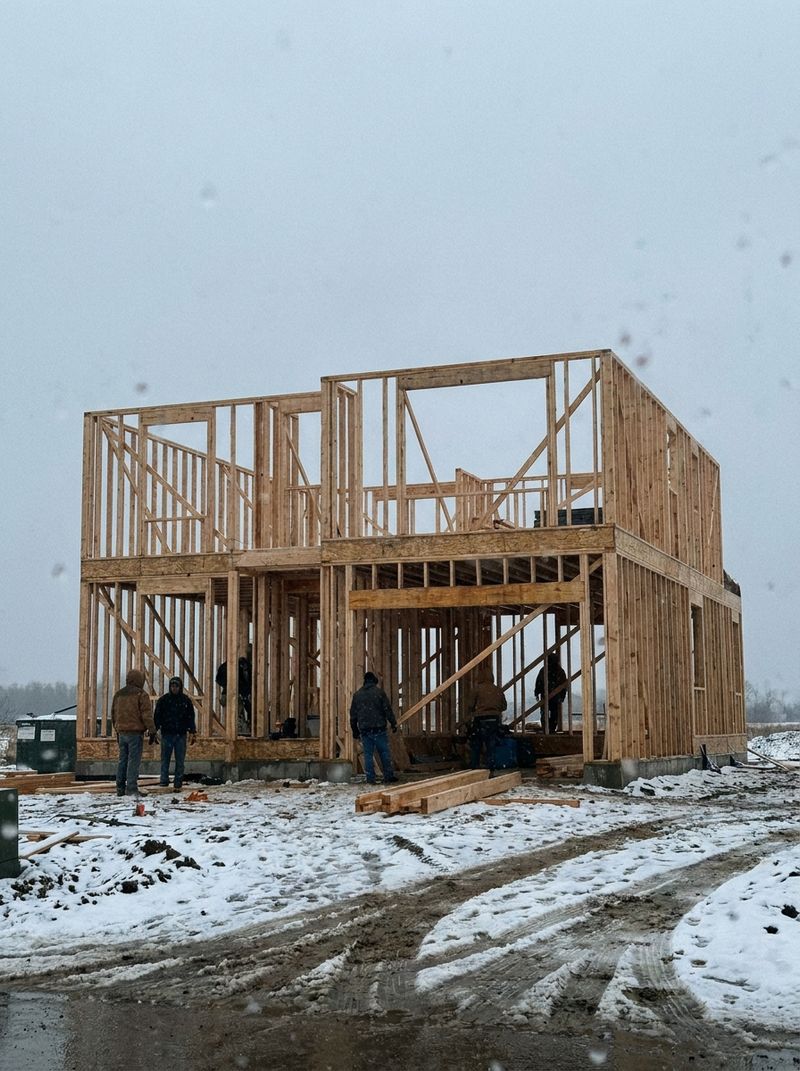
I ran a small construction crew for a lot of years. Six of us, me included. Not a big operation, but a good one. We did honest work and we did it right, and in this trade word gets around, and the good word on us is how we landed the biggest job any of us had ever seen.
A developer named Prentice was putting up a whole subdivision, and he hired my crew to frame and finish a big chunk of it. Eight months of work. The kind of contract that changes a small company's whole life.
And there was a completion bonus written right into it. A good one. Split six ways, it was the kind of money that meant a real Christmas. Danny, my finish carpenter, was behind on his mortgage and that bonus was going to catch him up. Manny had a baby coming. That money wasn't a luxury for my guys. It was air.
So we killed ourselves on that job. On time. Under budget. Cleanest work we ever did. Eight months, barely a day off, because we could all see the finish line and what was waiting past it.
The Trailer
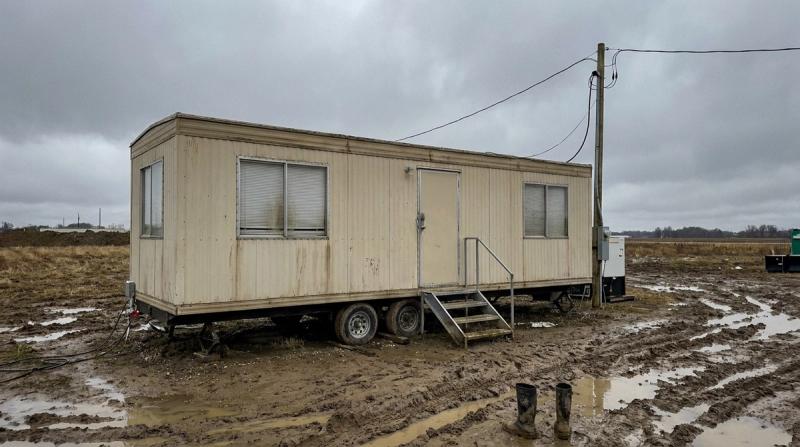
Two weeks before the job wrapped, Prentice called me into his site trailer. Nice trailer. Nicer than my house. And he had a lawyer's letter on the desk, and he slid it across to me like a card player, and he told me he was letting the whole crew go, effective immediately.
There was some technicality in the contract. A permit filing, a date, some paperwork thing that didn't mean anything and that his own office had handled. But it was enough of a hair to split that he could fire us for cause with the job almost done, and never pay the bonus, and bring in some cut-rate crew to hang the last doors.
I stood there in that trailer and I did something I'm not proud of, which is I begged. Not for me. For my guys. I told him about Danny's mortgage. About Manny's baby. I asked him how he could do this to six working men two weeks before Christmas.
And he leaned back in his chair, and he smiled at me, and he said the thing I have not forgotten one word of in ten years.
"That's business, Mark. It's not personal. You did nice work. But nice doesn't read a contract, does it? Maybe you fellas should find an easier trade." And then he laughed. Actually laughed, like we were sharing a joke.
The Winter After
I don't want to spend too long here, because it's the worst part and you can fill in a lot of it yourself. But you should know what that man's little bit of sport actually cost, so the rest of the story means something.
The lost bonus and the lost weeks broke my company. I couldn't make payroll. I had to lay off the same six men I'd just watched get robbed. Danny lost his house that spring. Manny moved his new family in with his in-laws and didn't fully recover for years. Two other guys left the trade for good.
Me, I lost the company I'd spent fifteen years building. I hung on to my own house by my fingernails. I took whatever small jobs I could get, working alone out of my truck, a fifty-year-old man starting over from nothing because a rich man wanted to keep a number that, to him, was a rounding error.
It took me the better part of three years to get back on my feet. And I did get back on my feet. Slowly, one honest job at a time, I built a new outfit. Smaller at first, then not so small. And here's the part that matters. Danny came back to work for me the day I could afford one employee. Manny, the day I could afford two. We rebuilt it together, the guys Prentice threw away and me, and in time we were doing better than we ever had before he came along.
I'd more or less made my peace with it. I didn't forgive Prentice, I won't pretend I did. But I'd stopped giving him rent in my head. Which, if you've ever been wronged bad, you know is its own kind of victory.
The Knock
Then, ten years after that trailer, on a regular weeknight, somebody knocked on my door in the evening. And I opened it, and it was Prentice.
He'd gotten old. That was the first thing. Old and gray and smaller somehow, in a coat that had been expensive a while ago. And the cologne of being rich was gone off him completely. He stood on my porch and he could barely look at me.
It came out in pieces. His development company had gone under a few years back, some deals that went bad, some of it his own doing. He'd lost most of what he had. But that wasn't why he was here.
He was here because his house, his own home, the one nice thing he'd hung on to, had a serious problem. A structural thing, the kind that gets dangerous. And he'd called every contractor in the county, and not one of them would take the job.
Because here's the thing about doing people dirty for thirty years. Word gets around in a trade even better than good word does. Every builder in that county knew exactly who Prentice was and what he did to the crews who worked for him, and to a man, they'd all told him no. Some of them, I found out later, had laughed. The way he used to laugh.
I was the last door he had left to knock on. The man he'd fired for sport. He knew it, too. He said, "I know I've got no right to be standing here, Mark. You're the only one left who might do the work. I can't pay much. I don't have much. I didn't know where else to go."
What I Did
I'm going to tell you the truth about what went through my head, because I think it's the honest part of this whole thing.
For about ten seconds, I wanted to laugh in his face. I had the line all ready. That's not personal, Prentice, it's just business, maybe you should find an easier house. Ten years I'd kept it in a drawer, and here he was, and I could finally use it. It would have felt so good. For about a minute.
But here's the thing about being the kind of man who laughs at another man on the worst day of his life. I'd met that man. I knew exactly what he looked like. He was standing on my porch, ruined, because that's where it ends up. And I did not want to be him. Not even for one satisfying minute. Not even to a man who'd earned it.
So I said, "I'll look at it in the morning."
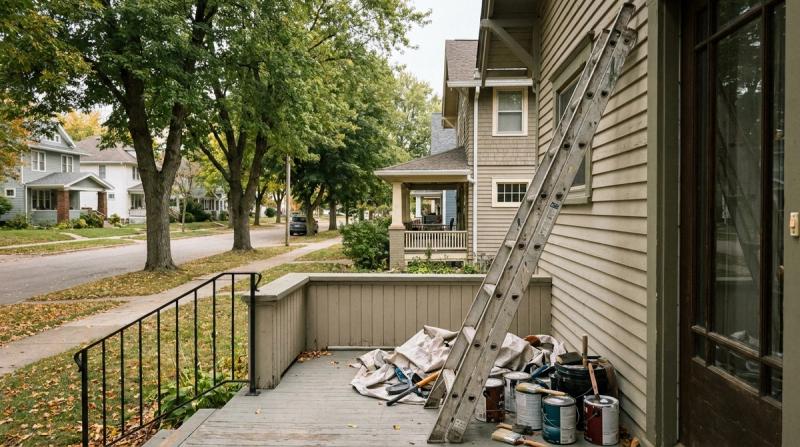
And I did. And it was a real problem, a dangerous one, and I told him we'd fix it. And then I told him the one condition, the only one.
The Crew That Showed Up
The condition was that I got to bring my crew. My whole crew. And I did.
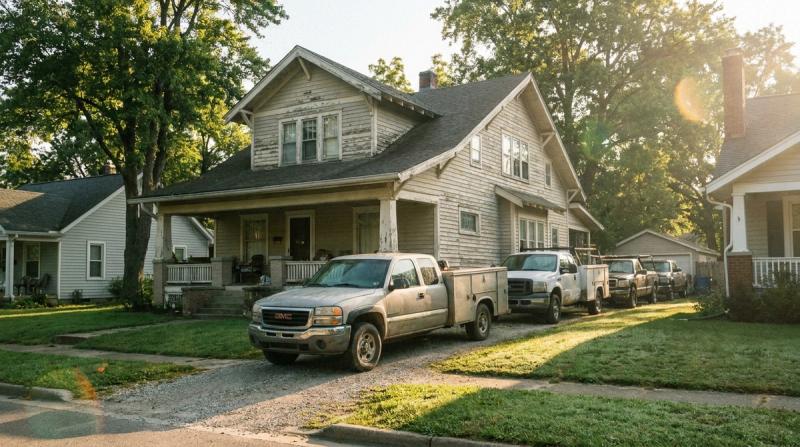
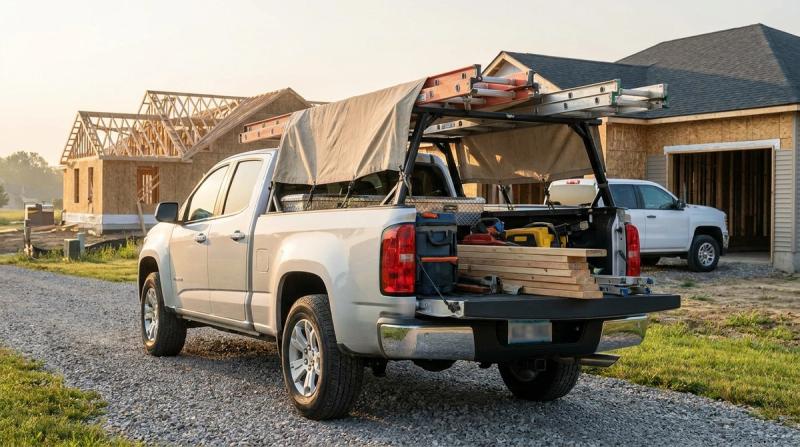
So on the first morning, four trucks pulled up to Prentice's house, and out of them climbed Danny, whose house he'd cost him. And Manny, whose baby he'd nearly starved. And the rest of the men he'd fired for sport a decade before, older now, doing better now, there to save the home of the man who'd tried to ruin them.
I watched Prentice's face when he realized who was walking up his driveway. He knew every one of them. And to his credit, and I did not expect him to have any credit left, he didn't try to run from it. He came out and he stood there and he made himself look at those men. And he shook every one of their hands, and to each one he said the words. I'm sorry. I'm sorry for what I did to you. He knew their names. He knew Danny lost his house. He'd known the whole time, ten years, which somehow made it worse and the apology better, both at once.
We did the work right. Of course we did, it's the only way we know how. We fixed his house better than it needed to be fixed, and my guys were kind to him the whole time, which they did not have to be, and which I think unsettled him more than anything.
He paid what little he could, and I didn't chase him for the rest. Danny wanted to. I told Danny no. I said we're not going to spend one more day of our lives collecting a debt from that man. We already got the only thing worth having off him, which was the look on his face when the men he threw away turned out to be the only ones on earth who'd help him.
Not Personal
Prentice died a couple of years after that. I heard about it from Danny, who heard it from somebody. Small funeral. Not many came. That's how it goes for a man who spends a life telling people it isn't personal.
I think about that word a lot, actually. Personal. He used it like a shield, all those years, like if a thing was just business then it didn't count against his soul. But it all counts. Every bit of it was personal, to Danny standing in an empty house he couldn't afford, to Manny's wife, to me at fifty starting over out of a truck. It's always personal to the person it's happening to. That's the part men like Prentice never let themselves know.
The last morning at his house, packing up the trucks, Prentice came over and asked me why I'd done it. Why I'd helped him at all, after everything. And I didn't have a speech. I just told him the truth. I said, "Because I've got to live in here," and I tapped the side of my own head, "the rest of my life. And I already know what your version's like in there. I didn't want it." He nodded, slow, like a man finally reading the contract. And then we drove home, all four trucks, and we did not talk about him again.