My father did not speak to me for twenty years.
Not one phone call. Not one birthday card. Twenty years of complete silence, all because I married a man he decided was not good enough for me, on a Saturday in June that he refused to attend.
His name was Danny. He was a mechanic with grease under his nails and the kindest heart I have ever known. My father took one look at him and decided my life was headed the wrong way, and he told me so, and I married Danny anyway.
A Proud Man Is a Different Sort of Hard
Now, you need to understand one thing about my dad. He was not a cruel man. I need you to know that, because the story does not make sense otherwise. He coached my netball team. He taught me to drive in an empty church car park on Sunday afternoons. He cried at sad films when he thought nobody was looking.
But he was proud. And pride is a different sort of hard than cruelty. When my father drew a line, he stood behind it. And I, heaven help me, inherited just enough of that same stubbornness to stand behind my side of it too.
So the years went by.
I got married. We had two children he never met, a boy and a girl. For the first few years I sent photographs in the post. School pictures. A crayon drawing my daughter made of a grandfather she had never seen, just a tall stick figure she imagined.
They came back unopened. Every one. Return to sender, in my father's handwriting, which somehow hurt more than if he had simply thrown them away.
So I stopped. There is only so many times a person can be told to go away before they finally believe it.
The Argument We Kept Having
Danny used to say it to me perhaps once a year. "Ring him. Just ring him. Life is short."
And I would say, "He's the parent. He should ring me."
And Danny would let it go, because he was a wiser person than I was, and neither my father nor I ever picked up the phone. That is how twenty years disappear. Not all at once. One stubborn day at a time, each of them small enough to ignore.
That is how twenty years disappear. Not all at once. One stubborn day at a time.
The Call
Then my sister rang. I almost did not recognise her voice, it had been so long.
Dad was in hospital. It was his heart, and it was not the sort of stay you come home from. "If you want to see him," she said, "it has to be now. Days, the doctor said. Maybe less."
I almost did not go. I'll say that plainly, because I think the people who pretend they would have rushed straight out the door are lying to themselves.
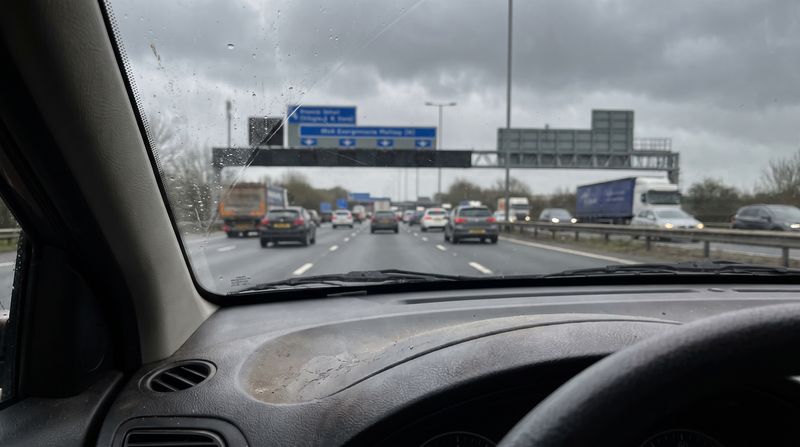
I sat in my car on the drive for a full hour. Engine off. Arguing out loud with a man who was four hours away and could not hear me. Twenty years of arguments I had never got to finish, all of them coming up at once in a cold car on my own drive.
Danny came out and tapped on the window. He did not say ring him this time. He just said, "Go. Whatever happens, go, so you never have to sit on this drive again wondering."
So I went. I drove four hours with my hands tight on the wheel, rehearsing what I would say to one more wall.
The Room
He was asleep when I arrived. Smaller than I remembered. The big, proud man of my childhood had become a thin shape under a pale blanket, and I stood in the doorway for a long moment, not certain my legs would carry me in.
My sister squeezed my arm and left us alone. I sat down in the chair beside the bed and listened to him breathe, and I did not know what to do with my hands, so I looked for something to do.
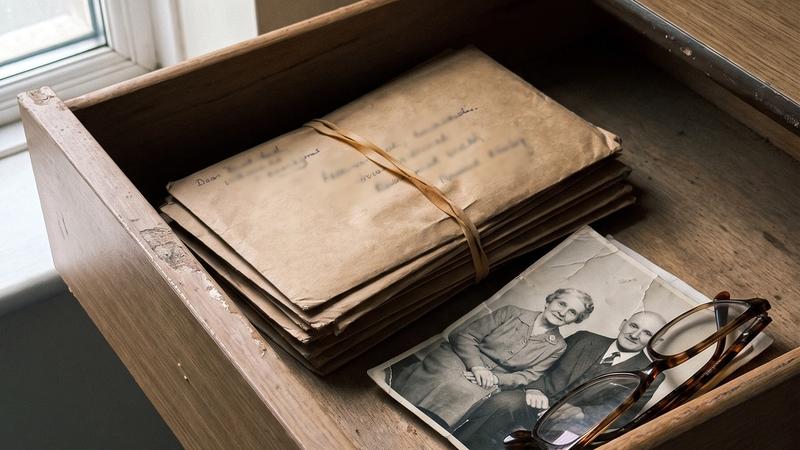
His reading glasses. He always kept them close. I assumed they were in the little drawer of the table beside his bed, so I slid it open to set them out for when he woke.
The glasses were in there. But so was everything else.
The Drawer
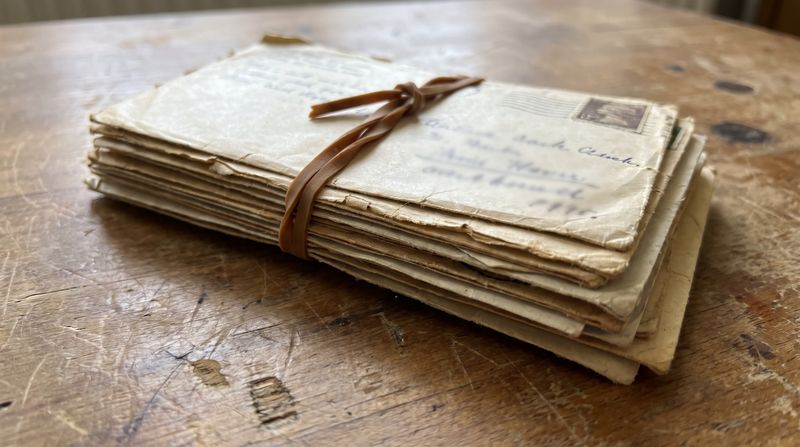
There was a stack of envelopes, held together with a rubber band gone brittle with age. Birthday cards. One for every year. Twenty of them, each addressed to me, each sealed, each with a stamp on it.
Not one of them had ever been posted.
Underneath the cards was a photograph, creased soft from being handled a thousand times. It was my wedding photo. The one from the day he refused to come. I never knew he had a copy. He must have got it from my sister and worn it thin with his thumb over twenty years.
And under the photograph was a small notebook. I opened it, and it was full of my father's careful handwriting, and it took me a moment to understand what I was reading.
He had been keeping track of my life. From a distance. From whatever scraps he could get. "She has a boy now, my sister tells me. Daniel Junior. Good strong name." "Heard she bought a house on Elm Road. Always did love a garden." "The girl draws. Susan says she's good. Wonder where she gets it."
Pages of it. Twenty years of a man loving his daughter in secret, in a notebook, because he did not know how to do it out loud.
Twenty years of a man loving his daughter in secret, in a notebook, because he did not know how to do it out loud.
When He Woke
I was still holding the notebook when he opened his eyes.
For a second he just looked at me, confused, as though he thought he might be dreaming. Then his eyes went to the open drawer, and the cards in my lap, and his whole face changed.
"You weren't supposed to see those," he said. His voice was almost nothing. "I was going to... I kept meaning to..."
"Dad," I said. "Why did you never send them?"
He let that sit between us for a while. Then he said the truest, saddest thing I have ever heard a person say.
"Because sending the first one meant admitting I was wrong about all the rest. And I didn't know how to be the man who was wrong for twenty years. It was easier to just... keep writing them and not post them. God, that's a stupid thing. I can see now it's a stupid thing."
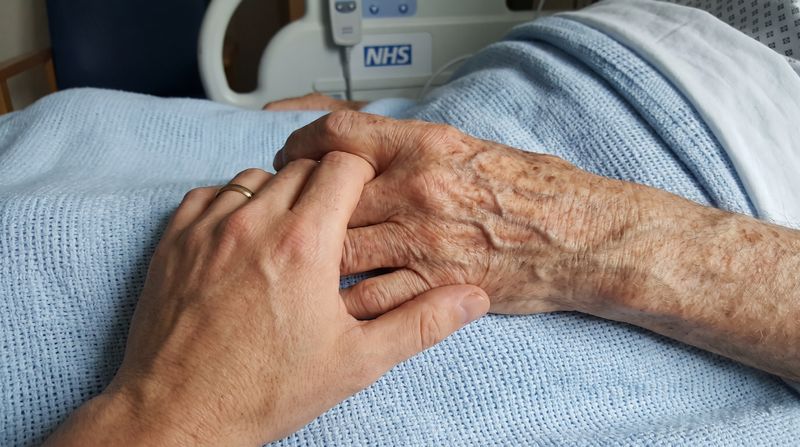
I took his hand. The first time I had touched my father in twenty years. "It's not stupid," I said. "You wrote me twenty birthday cards, Dad. That's not nothing. That's not even close to nothing."
The Days We Got
We had six days. That is what twenty years of stubbornness left us with. Six days.
I rang Danny and the children and they drove up the next morning. My father met his grandchildren for the first time when he was eighty-one years old and dying, and my daughter, the one who once drew him as a tall stick figure, sat on the edge of his bed and showed him her real drawings now, and he put on the reading glasses from the drawer to see them better.
He apologised to Danny. Man to man. Danny, being Danny, told him there was nothing to forgive, which was a lie and a kindness at the same time, the best sort of lie there is.
On the last day, my father asked me to post the cards. All twenty. "Send them to yourself," he said. "I want you to get them. Even late. Especially late."
So I did. For twenty days after we buried him, a birthday card arrived at my house in my father's handwriting. One a day. Twenty years of birthdays, all at once, from a man who had loved me the whole time and simply could not find the door.
Now, here is what I know now that I wish I had known on that drive. Pride will tell you that you are protecting something. Your dignity. Your side of the argument. It is lying. Pride does not protect anything. It just runs the clock down while the two of you wait for the other to go first.
Somebody has to go first. It might as well be you. It might as well be today.
I still have the notebook. I read it sometimes, on the bad days, when I miss him. And every time, I reach the last entry, the one he must have written from hospital, in a shakier hand than all the rest.
It just says, "If she comes, tell her the drawer. Tell her I never stopped. Tell her I just didn't know how."