This is about my mother-in-law, and the twenty-two years I spent trying to earn a warmth from her that never came. It is also about an index card, because the index card changed how I understand all twenty-two of those years.
The Woman Who Never Warmed to Me
Vivian was, to everyone else in the world, wonderful. That's the part that made it so hard. She wasn't a cold woman in general. She was the warm center of that whole big family, the one everybody circled around, funny and sharp and generous with her time and her table.
Just not with me.
It was never anything you could point to. That's what made me feel crazy for twenty-two years. It was a cheek turned a half-inch when I leaned in to hug her. It was the way she'd say "well, isn't that interesting" about a dish I'd worked all day on, and then not take seconds. It was watching her braid my daughter's hair with a tenderness she never once, in two decades, aimed at me.
I loved her son with my whole life. I gave that family three grandchildren. I showed up to every holiday, every hospital stay, every Sunday. And I stayed, in her eyes, the girl her boy had brought home. Tolerated. Never claimed.
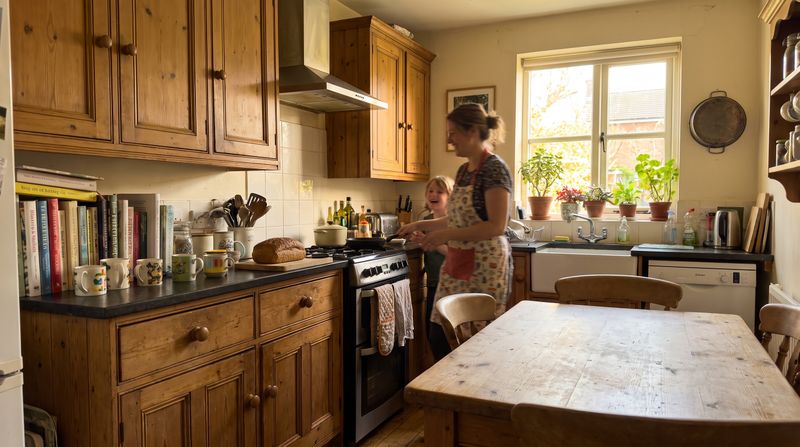
I used to cry about it in the car on the drive home, quietly, so my husband wouldn't feel caught between us. He saw it, though. He'd take my hand at red lights and say, "It's not you. I promise you it's not you." And I'd nod, and not believe him, because how could it not be me? I was the constant. I was the one thing in the equation that never changed.
The Cake
And then there was the apple cake.
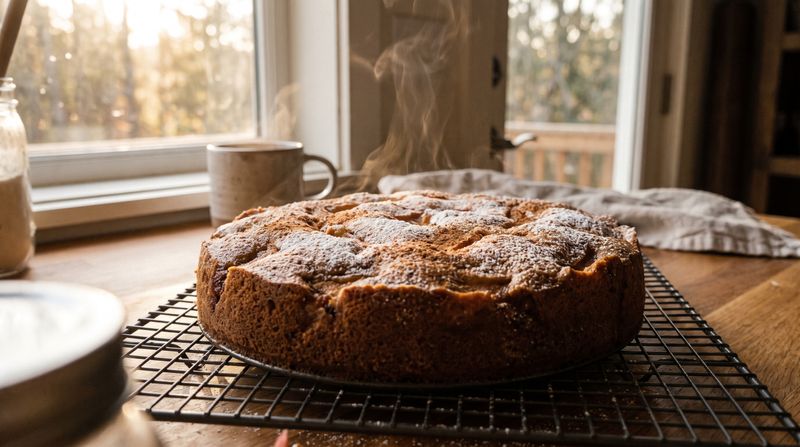
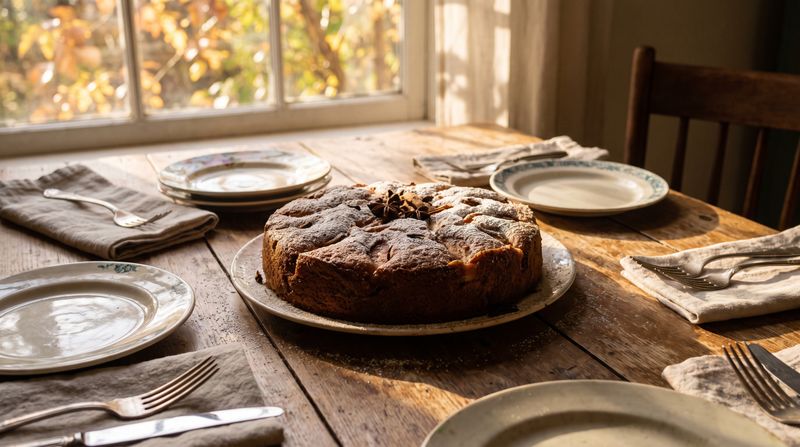
Every autumn, Vivian made this spiced apple cake, and it was not a normal cake. It was the cake. The smell of it, cinnamon and brown butter and something else nobody could ever place, meant home to three generations of that family. It came out for birthdays and holidays and hard days, and people literally closed their eyes when they ate it.
And for fifty years, she would not give the recipe to a living soul.
Her daughters begged. Her sisters begged. Cousins tried to steal it, watching her hands in the kitchen, and somehow always missing one step, one ingredient, so theirs never came out right. It was a running family joke. "Ma, give up the cake." And she'd smile that little smile and say, "That recipe is going in the coffin with me."
I never even bothered to ask. It felt absurd, honestly. She wouldn't give it to her own daughters. What was I, the daughter-in-law she couldn't quite look at, going to do, be the exception?
Losing Her
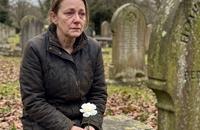
Vivian died last spring, after a short, hard illness. And I grieved her in the complicated, tangled way you grieve a person who never let you all the way in.
Everybody else's grief was clean. They'd lost the woman who adored them. Mine was full of thorns. I was mourning someone, and also mourning the relationship we never got to have, and also feeling guilty for making my grief partly about myself, and also, if I'm honest, feeling one last time that old ache of being on the outside of her love even at her own funeral.
I made a green bean casserole for the reception. She'd once said mine was "a bit heavy." I made it anyway. I put it at the end of the table and I watched to see if anyone ate it, and I hated that I still, even then, wanted her approval. A dead woman's approval. That's how deep it went.
My husband found me in the church kitchen afterward, scraping my untouched casserole into the bin. He put his arms around me and said, quietly, "She did love you. She just never learned how to show a person." And I nodded, and I did not believe him, and I thought that was the end of the whole sad story. I thought I would spend the rest of my life not quite believing it.
I was wrong about that. She had one more thing to say to me. She'd just been saving it, the way she saved everything, until she had no choice but to let it go.
The Lawyer's Office
A few weeks after the funeral, the family gathered at the lawyer's office. Vivian had been organized about her things, and she'd left specific items to specific people, with little notes about why. It was very her. Even her estate had a seating chart.
The lawyer went around the room. Her wedding ring to her oldest daughter. Her garden tools to the son who gardened. Her books, her quilts, her mother's china, each thing landing with the person it was clearly always meant for. I sat quietly in the back, the way I'd learned to in that family, not expecting to be named, and mostly at peace with it.
And then the lawyer looked down at his list, and he looked up at me, and he said my name.
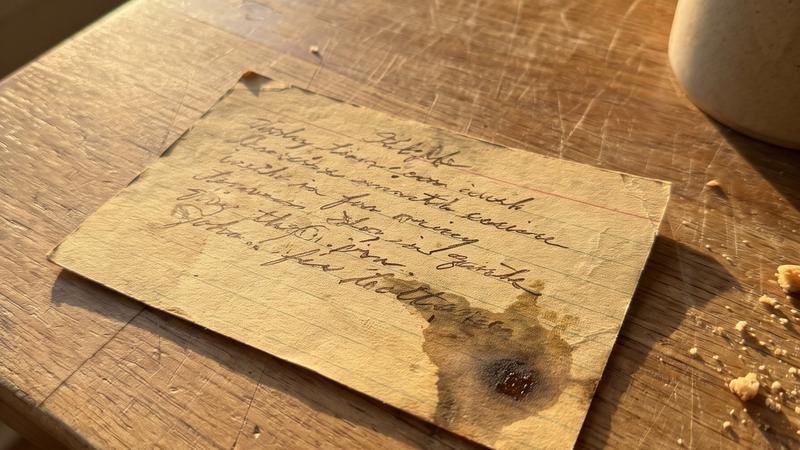
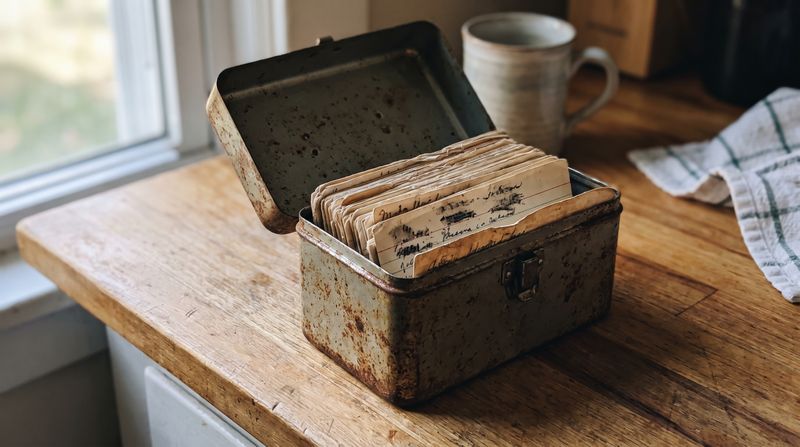
I actually looked behind me, sure there was another person he meant. There wasn't. He slid a small object across the table to me. Worn. Stained at one corner with something that had once been butter or oil. An index card, soft with age from being handled a thousand times.
It was the apple cake recipe. In her handwriting. The cake she swore for fifty years would go in the coffin with her.
She had left it to me. The one she never warmed to. The whole room went silent, because every single person in it understood what that card was, and what it meant that it had come to me.
The Back of the Card
My hands were shaking so hard I could barely turn it over. Because the lawyer said there was something written on the back. A note, just for me.
Here is what it said, in her careful, slanted hand.
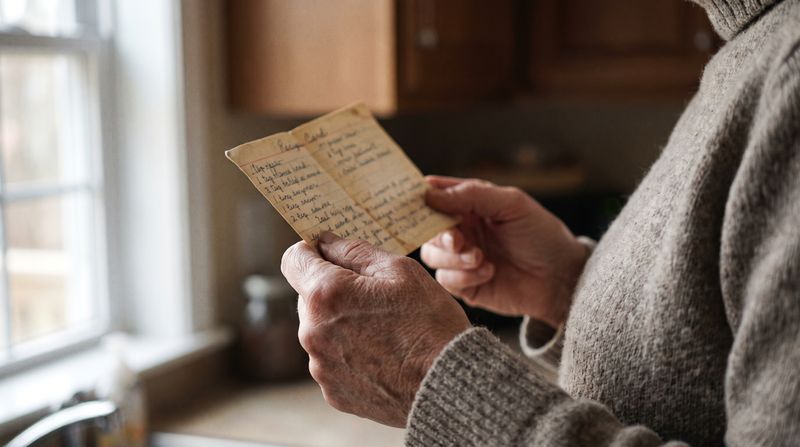
To the daughter I was too frightened to claim. I know what I was. I know what I cost you. My own mother died when I was young, and I never learned how to let a new woman into my heart without feeling I was betraying her, and I am ashamed to say I made you pay for a wound that was never yours. I watched you love my son for twenty-two years better than I knew how to love anybody. You were the best of us, and I was too proud and too scared to say so while I could. This recipe is the most precious thing I own. It is the only way I know how to say the word I could never make my mouth say to you. Daughter. It was always meant to be yours. Forgive me. Vivian.
I could not read it out loud. My husband had to. And by the end his voice was gone, and half the room was crying, and I was holding a stained index card to my chest like it was a living thing.
The Door She Couldn't Open
For twenty-two years I thought her coldness was about me. That I was too much, or not enough, or simply not the woman she would have chosen for her son.
It was never about me at all. It was about a little girl who lost her mother too young and grew up believing that letting someone new into her heart was a kind of disloyalty to the one she'd buried. She spent her whole life with a door held shut against a grief that happened when she was small. And I spent twenty-two years standing on the other side of that door, knocking, taking the silence personally.
She loved me the whole time. She just couldn't get the door open. And when she finally knew she was dying, she did the only thing she could. She left the door open behind her, with the most precious thing she owned sitting right inside it, and my name on it.
The First Autumn Without Her
This past October, for the first time, I made the cake.
I followed her card exactly, her funny little notes and all, "don't rush the apples," "a real pinch, not a scared one." And when it came out of the oven, my whole kitchen filled with that smell. Cinnamon and brown butter and the something else, which turned out to be a spoonful of orange marmalade, her secret, hidden in a recipe on a card in a drawer for fifty years.
The smell of it brought my husband in from the other room with his eyes already wet. "That's it," he said. "That's exactly it. That's my mom's kitchen." And my kids came running, and we stood around that cake, and it was like she was right there with us. Finally, fully, warmly there.
I make the cake every autumn now. And every family gathering, every birthday, every hard day, it comes out, warm and spiced, and it means home to my children the way it meant home to hers.
And when someone new marries into this family someday, some nervous young person standing at the edge of all of us, wanting so badly to belong, I already know what I'm going to do.
I'm going to teach them the cake. On the very first autumn. No waiting. No door held shut. I'm going to hand them Vivian's recipe and call them daughter, or son, out loud, right away, while I still can. Because she taught me, too late for us but not too late for me, exactly how much it costs to make someone wait to hear it.