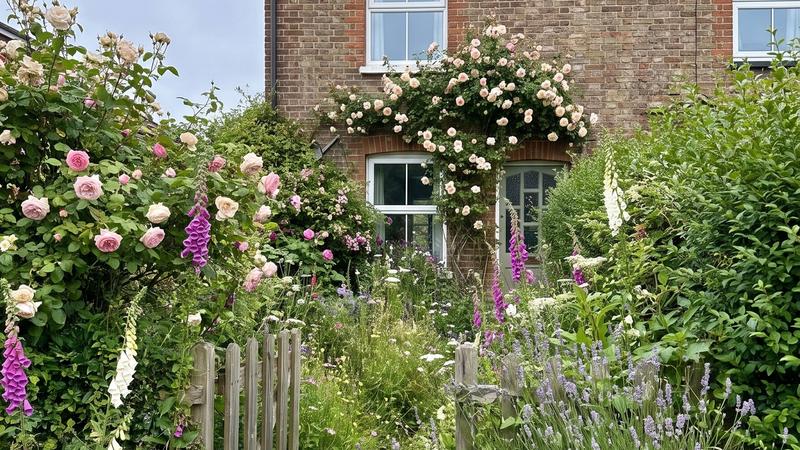
A man moved onto my nan's street, took one look at her front garden, and reported her to the council as an eyesore.
Now, I will grant him this much. Nan's front garden is not tidy. It has never been tidy. It is a glorious, overgrown, chaotic explosion of a thing, roses and foxgloves and a great cloud of lavender, with little worn paths running through it where she potters about at eighty-one years old, talking to the plants (and, I suspect, to a few people who aren't there anymore).
To a man who had lived on the street for six weeks and liked a nice bit of paving, it must have looked like neglect. Like an old dear who couldn't cope and had let the place go.
It was just about the opposite of that. But he had no way of knowing, and he didn't think to ask. He just reported her.
The Note Through the Door
It started, as these things do, with a note through the door. Very polite. The sort of polite that has a knife in it.
He suggested Nan might like to "tidy up" the front, or perhaps "consider some low-maintenance paving," as several other houses on the road had done. He signed it with his name and his house number, as though they were now pen pals.
Nan, being Nan, ignored it entirely. She has buried a husband, two sisters, and most of her friends. She was not going to be moved by a laminated note about kerb appeal.
So when nothing changed, he escalated. He rang the council and filed a formal complaint about the state of her garden. And the council, obliged to act on complaints, sent her a letter.
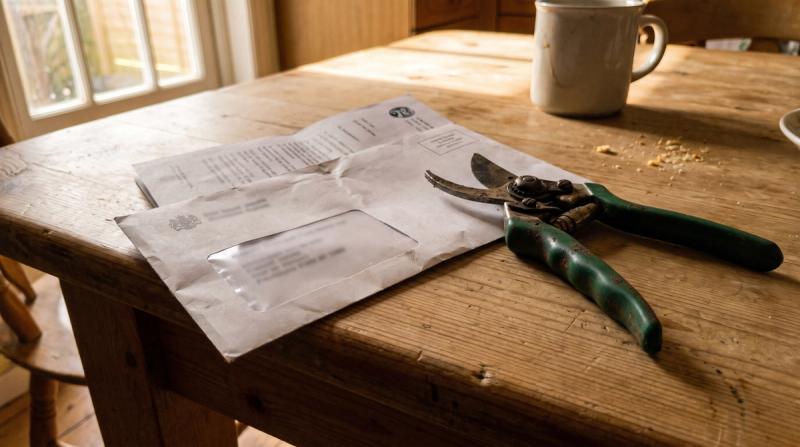
That was the letter I found in her hands on the Sunday. She hadn't rung me about it. She hadn't rung anyone. She was just sitting at the kitchen table with it, very still and very quiet, which for my nan is roughly the equivalent of anyone else screaming the house down.
"It's nothing, love," she said. "Man wants me to pave the garden." And then, after a moment, in a smaller voice than I have ever heard her use: "I can't pave the garden."
What the Garden Actually Was
Here is the thing the man with the paving never asked about.
My grandad died forty years ago, far too young. And in the months after, Nan, who did not know what to do with the grief, dug up the front lawn and planted a rose. Just one. A white one, for him.
I've seen the photograph of her doing it, actually. My mum took it. Nan in her pinny, on her knees in the churned-up lawn, forty years old and newly a widow, planting one white rose in the middle of a perfectly ordinary suburban garden while the neighbours, I have no doubt, twitched their net curtains and wondered whether she'd finally gone round the bend.
She hadn't gone round the bend. She'd found the one thing that helped. You could not talk to my nan about her grief. She'd offer you a biscuit and change the subject and ask after your mother. But she could plant it. She could get it into the ground, and tend it, and watch it come back every single spring. That, it turned out, she could bear.
And then Mrs. Ellery at number nine lost her husband, and Nan planted a rose for him too, and took Mrs. Ellery out to see it. And word got round the street, the way things do, and it just... grew from there. Literally.
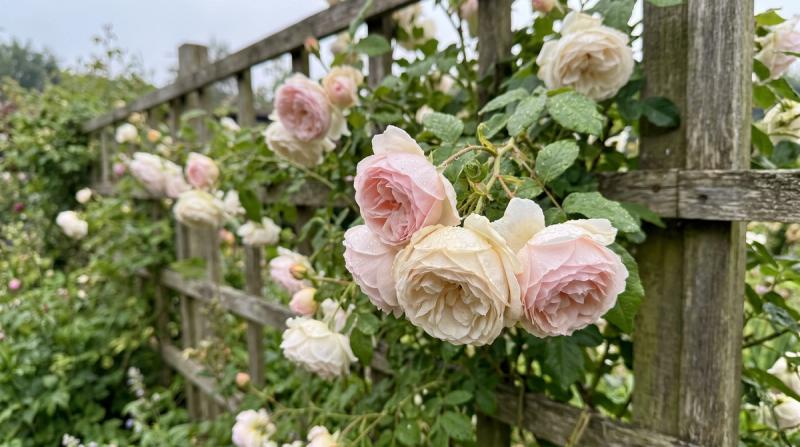
For forty years, every time someone on that street died, my nan planted something in her front garden for them. A rose. A clematis. The foxgloves are for the Pearson twins' mum, who loved them. The great cloud of lavender is for old Bill from the corner, who kept bees, because Nan wanted the bees to have somewhere to go when he was gone.
It was not an overgrown garden. It was forty years of a street's grief, and a street's love, planted one flower at a time by a woman who didn't know any other way to hold it all.
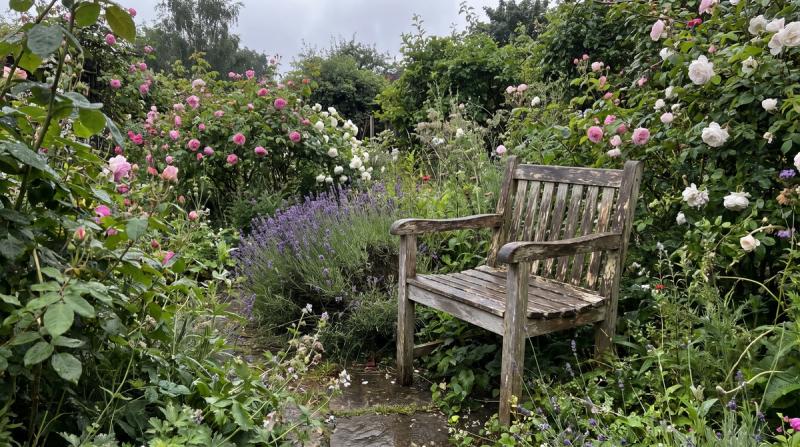
People came to sit in it. That's the part I don't think anyone off the street would understand. Widows would come and sit on the little bench among the flowers and have a cup of tea with Nan and, in a way, with the person their flower was for. She kept a spare chair out there for exactly that.
Mrs. Ellery told me once that for the whole first year after her Frank died, the only place in the world she could properly breathe was Nan's front garden, on that spare chair, beside the rose that was his. She said Nan never once made her talk. They'd just sit. Sometimes for an hour and not a word between them, two widows and a rosebush, and Mrs. Ellery says it saved her life, and she does not mean that as a figure of speech.
And every funeral on that street, for forty years, the flowers came from Nan's garden. Free. She would be out there at six in the morning cutting them, because she said no family grieving a person should have to ring a florist and talk about money on the worst week of their life.
The Street Found Out
I was, I will admit, absolutely furious. I wanted to go and hammer on the man's shiny new door. Nan wouldn't let me. "He doesn't know," she kept saying. "How could he know?"
So instead I did something a bit more effective than hammering on a door. I mentioned the council letter to Mrs. Ellery at number nine. And Mrs. Ellery, who is seventy-eight and formidable, mentioned it to the Pearsons. And the Pearsons mentioned it to the whole street.
Now, a street like that doesn't do anything dramatic. Nobody egged his car. This is England; we express our fury through committees and strongly worded politeness. But something rather wonderful happened.
When the council sent someone out to inspect the garden, roughly fourteen neighbours were, entirely by coincidence, standing in it. Each one of them ready to explain, calmly, which flower was for their husband, their mother, their child. Which one they came to sit beside. What the garden actually was.
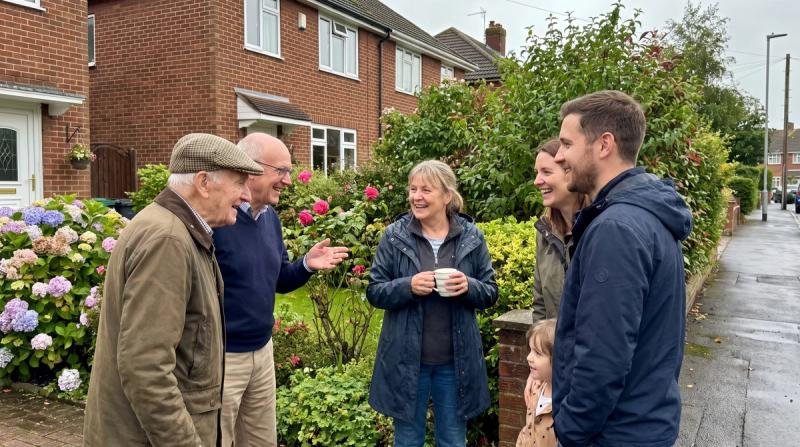
The poor woman from the council, who had come expecting to tell an old lady to cut her hedge, ended up in tears by the lavender. She wrote in her report that the garden was, and I am quoting the bit Nan has now framed in the hall, "a community asset of significant emotional value to the neighbourhood." Complaint dismissed. Case closed.
I asked Nan afterwards whether she'd been frightened when the letter first came. Whether she'd truly have paved it, if the council had ordered her to. She thought about it for a good long moment, the way she does, turning her mug round in her hands.
"No, love," she said at last. "I'd have gone to prison first." And the genuinely maddening thing about my nan is that I cannot, hand on heart, tell you she was joking.
The Man With the Paving
Which brings us to him. The new neighbour. And this is the part I did not see coming.
Somebody, and I have never found out who, put a note through his door explaining exactly what the garden was. Every flower. Every name. Forty years of it.
And a few days later there was a knock at Nan's door, and it was him, standing on the step looking like a man who wanted the ground to open up. He apologised. Properly, not the laminated kind. He said he hadn't known, that he'd just moved from a city where nobody spoke to anybody, and he'd seen an untidy garden and assumed the worst, and he was ashamed of himself.
And my nan, who is a better person than I will ever be, made him a cup of tea and took him out into the garden and showed him the roses one by one. Told him the names. Bill and his bees. Mrs. Ellery's husband. My grandad, the white one, the first one.
"You weren't wrong that it's wild," she told him. "Grief is wild. You don't pave over it. You give it somewhere to grow."
What Happens Now
His name is Graham. I feel I should tell you that, because he's rather part of the family now, which is not a sentence I expected to be writing.
It turned out Graham had lost his wife two years before he moved here, which is the real reason he'd fled a city full of memories for a quiet street of tidy drives. He'd been so busy paving over his own grief that a garden full of other people's frightened him half to death.
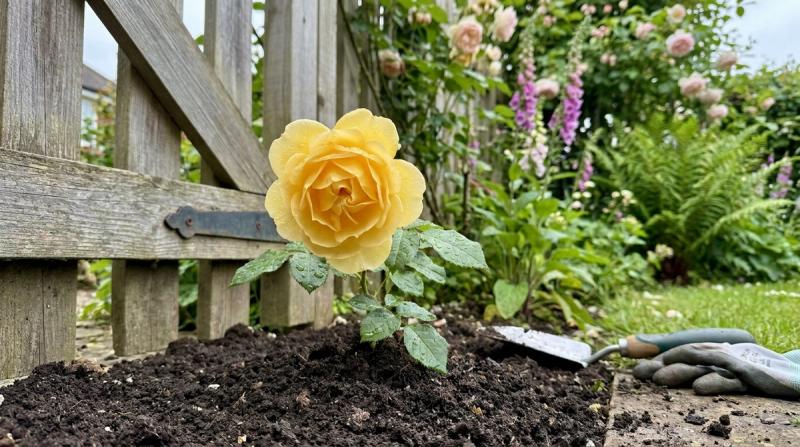
There is a new rose in Nan's front garden now. A yellow one, near the gate. It's for Graham's wife, Susan. He helped Nan plant it, on his knees in the soil in his good trousers, and I'm told he didn't say much, and Nan didn't make him.
He comes round most Sundays now. He's learning the names of the flowers. He's stopped talking about paving.
So. A man reported my nan's garden to the council because he thought it was a mess made by someone who'd stopped caring.
It was the opposite. It was the most careful thing on the whole street, forty years of a woman refusing to let a single person be forgotten, one flower at a time. He came to concrete it over, and instead he ended up planting a rose in it for the person he'd loved most.
Nan says that's what the garden does, if you let it. I'm inclined to believe her. She's had a lot of practice.