Every hero story you hear is about somebody big. The guy who runs into the fire. I want to tell you about a guy with a mop.
His name was Sal, and he was the janitor at my elementary school, and he is the reason I turned out to be a person at all. Let me tell you why.
The Last Kid
I was eight when I became the last kid at school every day.
My dad had taken off. My mom worked a register at a grocery store across town, and her shift ran till six-thirty, and after-school care cost money we did not have. So there was a gap. Three o'clock to about seven. And a little kid had to be somewhere during that gap.
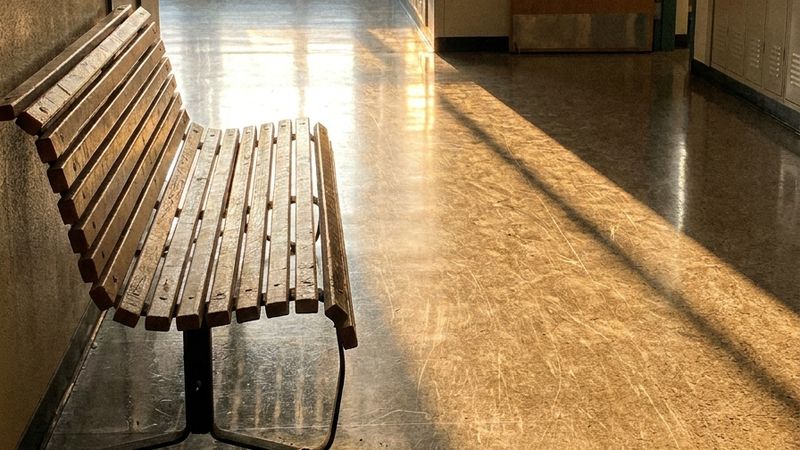
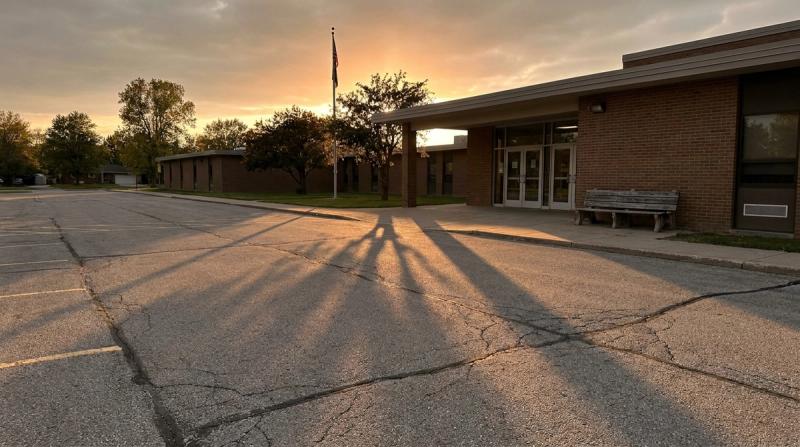
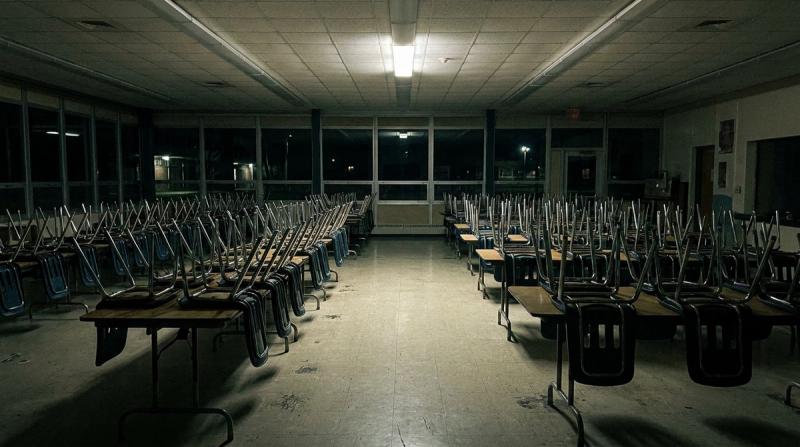
That somewhere was a wooden bench outside the front office. Every day, the last bell would ring, and the whole school would empty out in about eight minutes flat, all those kids running to all those cars. And then it would just be me. Backpack on my knees. Watching the lot go empty.
If you've never been the last kid, I don't know how to explain what that quiet is like. A school after everybody leaves is a big, echoey, lonely place for an eight-year-old. And I did it every single day, and I was embarrassed about it, the way kids get embarrassed about being poor, and I never told anybody how much I hated those hours.
I didn't have to tell Sal. He just saw.
The Job
Sal was the custodian. Older guy. Gray mustache, gray work shirt with his name stitched on it, a big ring of keys that jingled so you always heard him coming. The kind of guy the school ran on and nobody thanked.
One evening, maybe a week into all this, he stops his cart by my bench and looks at me and says, real serious, "You look like a capable young man. I could use a hand. This is a two-man job and I only got the one man."
And that was it. That was the whole thing. From then on I had a job.
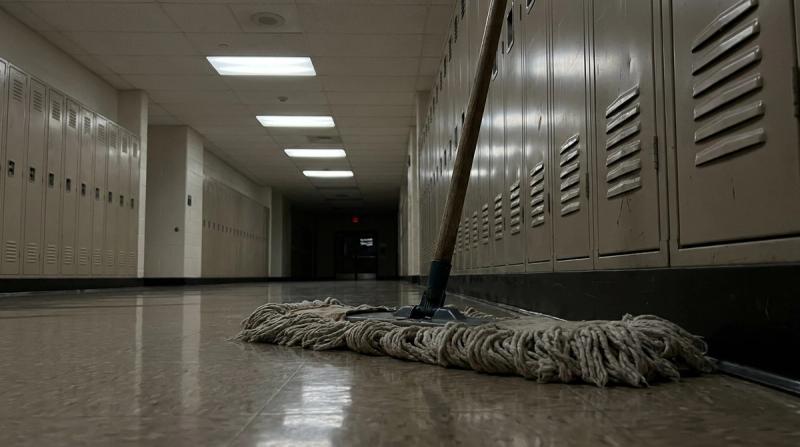
I pushed the big dust mop down the halls next to him, this eight-foot mop and this three-foot kid. I held the flashlight when he worked on a lock. I handed him wrenches and learned their names. He'd have me read the numbers off the thermostats. He made me feel like the building would fall apart without me, and to a kid who felt like a burden everywhere else, let me tell you what that does. It saves your life a little, every day.
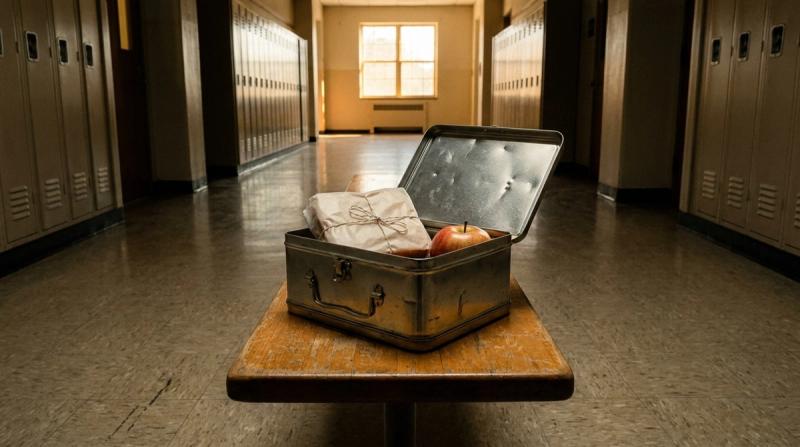
And he fed me. He kept a second sandwich in his lunch pail. Always. And every evening around five he'd "discover" he wasn't hungry and offer it to me so it wouldn't go to waste. It took me years, I mean years, to understand there was never a day he was going to eat that second sandwich. It was mine. He just knew a proud kid won't take charity but he'll take a favor for a coworker.
There was one evening I came out to the bench with a split lip. A couple of older kids had caught me alone after everyone had gone, and, well, they were bigger. I was trying not to cry and making a poor job of it. Sal didn't make a thing of it. He cleaned me up at the utility sink, pressed a wad of paper towel to my lip, and then he handed me a scraper and told me the gum under the cafeteria tables wasn't going to remove itself. And we spent an hour scraping gum in total silence, and by the end of it I felt like a person again. He never once asked who did it. He just gave me a job to do with my hands until the shaking stopped.
Spelling Words and Trash Cans
He quizzed me on my spelling while he emptied the classrooms' trash cans. He'd hold up a crumpled paper like a game show host and say, "Necessary. Spell it." And I'd spell it, walking the halls beside him, and if I got it he'd nod like I'd just done something remarkable.
He asked about my day. Every day. Not the fake way grown-ups ask. He actually wanted the answer. He knew the names of the kids who were mean to me. He knew which teacher I liked. When I got a good grade I showed Sal before I showed my mom, and I feel a little bad about that now, but that's the truth of it.
For four years, from third grade through sixth, Sal turned the loneliest hours of my childhood into the part of the day I looked forward to. Every single evening he waited with me until my mom's headlights finally swung into that lot, and only then would he pack up and go home himself. Every night.
I thought he was just a nice man who happened to work late. I was a kid. Kids think the world is arranged for their convenience. It never once occurred to me to ask why the janitor was always there until seven.
Then I Grew Up
Middle school came, and a bus route that got me home, and I stopped needing the bench. I'd see Sal in the halls and wave. And then we moved for my mom's better job, and I lost him the way you lose people when you're a kid, completely and without ceremony.
I did all right. Better than all right, honestly. I run my own contracting company now, a good crew, a real business. And I've thought about Sal my whole life, especially when I catch myself doing the thing he taught me without meaning to, which is: when somebody on my crew is the youngest, the poorest, the one who doesn't fit, I make them my guy. I give them a job that's really just an excuse to keep an eye on them. I didn't invent that. Sal put it in me on a wooden bench.
About a year ago, I finally went looking for him. I don't know why it took me so long. I think part of me was scared he'd be gone.
What It Cost Him
He wasn't gone. He was in his eighties, retired a long time, living small in the same town, his wife passed. I called him up out of nowhere, this voice from thirty years back, and told him who I was. And there was a long quiet, and then he said my name, my whole name, like he'd been keeping it somewhere.
I went to see him. And over coffee at his little kitchen table, I finally asked the question I'd never thought to ask as a kid. I said, "Sal, why'd you do it? Four years. Every night. Why'd you wait with me?"
And this is the part that got me. Still gets me.
He told me his shift had actually ended at four-thirty. Four-thirty. Not seven. For four years, that man clocked out at four-thirty and then stayed, off the clock, unpaid, another two and a half hours every single day, so that an eight-year-old wouldn't have to sit in an empty school by himself.

He drove home in the dark and ate his dinner late every night of those four years. He and his wife pushed their own supper back to seven-thirty so he could sit with me. His wife knew. She packed the second sandwich. It was her idea, he said, once she heard about the little kid on the bench.
Two people I barely understood as a child quietly rearranged their entire evenings, for years, unpaid, so that I would not be alone. And I never knew. I thought I was helping the janitor. The whole thing was scaffolding built around one lonely kid, and they let me believe I was the one doing them the favor, because they understood something about pride that most people never bother to learn.
"You weren't a job, kid," he said, and his voice went. "My wife and I couldn't have any of our own. And there you were every day, this little guy nobody was coming for till seven. What was I gonna do, mop around you? You go home to your dark house and I go home to mine? Nah. I just didn't want you sitting there alone. That's the whole thing. There's no more to it than that."
I asked him about the second sandwich. Whether I'd been right, all these years later, that it was never really his. He laughed, this creaky old laugh, and told me his wife, Rosa, made two every single morning from the day she first heard about the boy on the bench, and that she'd have been insulted if I'd ever caught on and tried to hand it back. 'She used to ask about you every night at supper,' he said. 'How was the boy. Did he eat today. That was the news in our house. How the boy was getting on.' Two people I barely even registered as a kid, and I was the news of the day at their kitchen table.
Now It's My Turn to Wait
Sal's slowed down a lot this past year. So now I'm the one who shows up. I go by every week. I fix the stuff around his house he can't get to, the loose railing, the door that sticks, and I bring lunch, and I make sure he isn't sitting in that little place by himself all day.
I bring my own kids. My son is eight, the same age I was on that bench, and he pushes Sal's wheelchair down to the park and back and thinks Sal is the greatest guy who ever lived, which, for the record, he is.
I named my company after him. Not obvious, he'd have hated a fuss. It's just his initials in the name, and every truck in my fleet carries them, and every job we do rolls out under the name of a man who clocked out at four-thirty and stayed till seven for a kid who wasn't his. Sal noticed that last year and pretended he didn't, and then he had to go blow his nose for a while.
He still calls me kid. I'm forty-one. He calls me kid, and every time he does I'm eight years old again on that bench, watching the lot fill up with everybody's parents but mine, and hearing a big ring of keys come jingling down the hall toward me. Coming to wait with me. Every night. I get to wait with him now. It's the best job I've ever had.