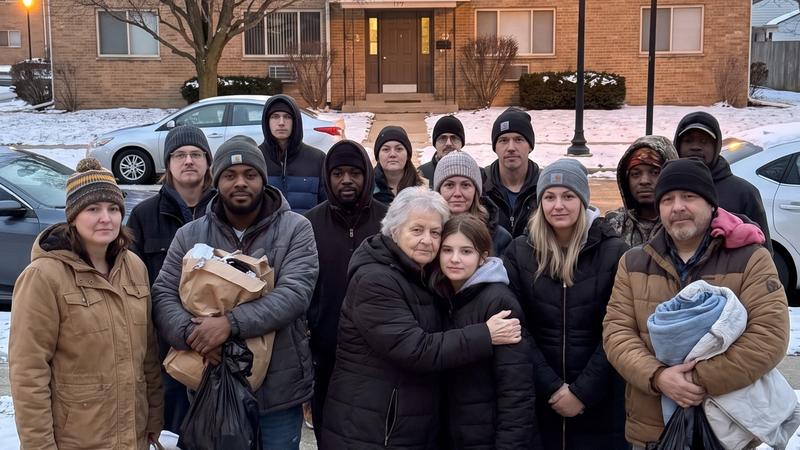
There's a saying my grandmother used to repeat until every one of us grandkids was sick of hearing it. A kindness thrown into the river will find you again downstream.
As a kid I figured it was just one of those things old women say to fill a silence.
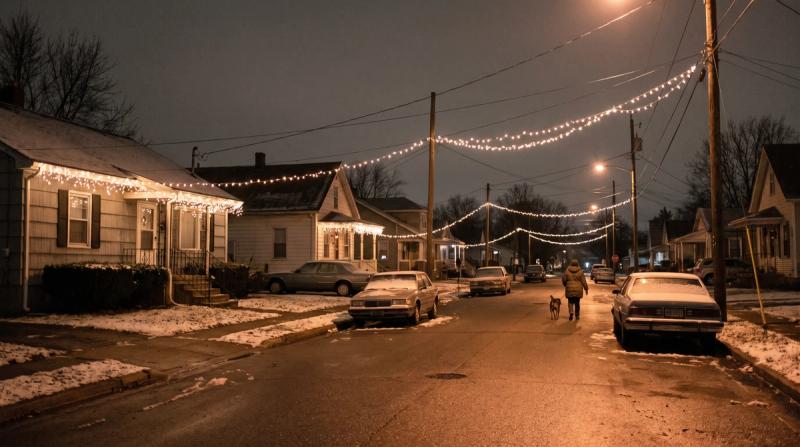
The week before Christmas, on our own street, I finally understood every word of it.
Who Miss Ruth Is
Her name is Miss Ruth. She's seventy-nine, and she's lived in the same little apartment on our block for more than forty years.
Everybody on the street knows her. She's the one who sends the little kids home when it's getting dark. The one who keeps an eye on the gate when the young moms have their hands full.
Her husband, Mr. Harmon, was our schoolteacher. But if I just tell you he was a teacher, I've told you almost nothing about the man.
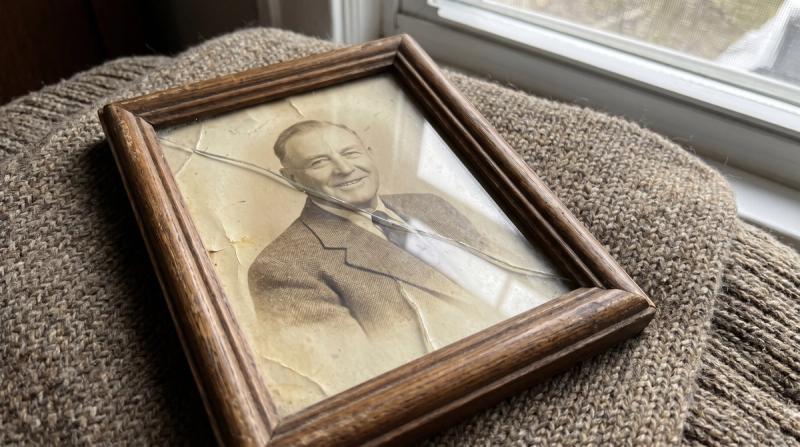
Mr. Harmon was the one who covered the things that trip up families who are barely making it. The field trips. The school supplies. A pair of shoes when a kid showed up in the snow without any.
He never announced it. You'd just find, at the start of the term, that your kid's trip was already paid for by somebody who'd asked the principal not to give a name. Everybody knew anyway. On a street like ours, everybody always knows.
In the evenings he'd sit at the table in his living room and tutor any kid who came. Free. Math and reading, under one lamp. I sat at that table myself. Half the grown men and women on our street sat there once, back when we were small.
When Mr. Harmon died, the whole street grieved like each of us had lost our own father. Because in a way, each of us had.
The Man in the Shining Car
Here's the thing about a street like ours. Everybody remembers. The old landlord had known Mr. Harmon for thirty years. He'd have cut off his own hand before he troubled Miss Ruth. Her rent stayed small. Everybody understood why, and nobody questioned it.
But last year the building changed hands. Sold to a young businessman from across the city. A man in a shining car and sharp shoes who came to look at his new property exactly once and saw rooms and rent and numbers. He didn't know a single one of our names. He didn't ask.
His name was Mr. Dean. He raised Miss Ruth's rent to a figure a widow with nothing coming in could never hope to pay.
When some of the neighbors went to talk to him about who she was, he waved them off. Business is business, he said. Sentiment doesn't pay for the roof.
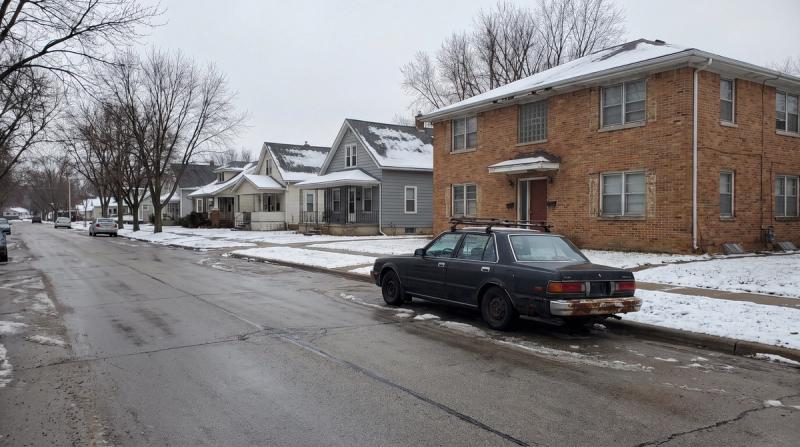
The Week Before Christmas
When Miss Ruth fell behind, Mr. Dean didn't wait. And he didn't soften it for the season. The week before Christmas, he sent two men to put her belongings out on the curb.
I was coming back from the store when I saw it.
Her thin mattress on the ground. Her pots stacked on the sidewalk. Her clothes in an open bag. And on top of the little pile, face up to the sky, the photograph of Mr. Harmon in its cracked frame. The same photograph that had watched over that apartment for forty years.
Miss Ruth was sitting on her own mattress in the middle of the street.
She wasn't crying. That's the part that broke my heart the most. She just folded her hands in her lap and looked at nothing at all. The way people do when crying would take more strength than they've got left.
I set my grocery bag down right there in the road. And then, one by one, all the way down our street, the doors started to open.
The Doors Opened
First it was Miss Carol from two doors down, who'd been one of Mr. Harmon's students forty years ago. Then the mechanic, Tommy, who Mr. Harmon had kept in school for three straight years. Then the young doctor, Denise, who learned her first math at that table in the living room and works over at the big hospital now.
By evening the whole street was standing in the road. Word travels faster than any car around here.
By nightfall the whole neighborhood knew. By the next morning people were coming from streets that weren't even ours, because Mr. Harmon's kindness had reached further than any of us had ever counted.
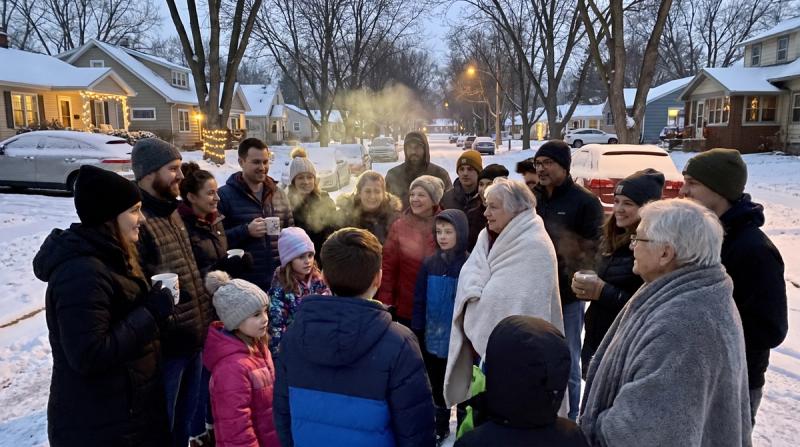
That night the neighbors did two things.
First, they carried Miss Ruth and every last one of her belongings into Miss Carol's spare room. And they set the photograph of Mr. Harmon on the wall where it belonged. Off the ground. Watching over her again.
Second, they started gathering money. Not as charity. As a debt getting paid back. Every family on that street, and plenty from beyond it, put in what they could. The doctor put in a lot. The mechanic put in his week's pay. The kids cracked open their piggy banks. By the third day, they'd gathered more than a full year of the new, cruel rent.
What They Found Out About the Landlord
It was Tommy the mechanic who found it out. Tommy knows everybody, and everybody's history.
He came to the gathering one evening with a strange look on his face, and he asked Miss Ruth a question.
"Miss Ruth," he said, "this Dean. The landlord. Was his mother by any chance a woman named Delia, who used to clean houses over on the east side, way back?"
Miss Ruth thought a long moment. "Delia," she said slowly. "Yes. Delia had a boy. A small, skinny boy. My husband kept him in school for four years. Paid for everything, when Delia was widowed and couldn't manage. The boy was sharp as a tack. He left for the city when he grew up. We never heard about him again."
The whole room went quiet. Because we'd all understood the same thing at the same moment.
The landlord who threw the widow out into the street was the very boy her husband had once lifted out of it.
When He Came Back
On Christmas Eve, Tommy and the doctor Denise went to Mr. Dean's office with the money. And with one old photograph they'd borrowed.
Not the photograph of Mr. Harmon. A different one, that Miss Ruth kept in a tin. A school photo, decades old. A room full of small kids crowded into a living room, and their teacher standing behind them.
They put the money on his desk first. A full year's rent, in cash. He looked at it, surprised. Softening a little already, because even a hard man doesn't expect a poor street to gather that much.
Then Denise set the school photo on top of the money. She pointed to a small, skinny boy in the second row. And she said, "Do you know this child?"
Tommy said Mr. Dean went very still. Then he picked up the photograph with both hands. He sat down slow in his chair. And this man who'd waved off sentiment as something that doesn't pay for the roof, this man started to cry at his own desk.
He hadn't known. When he bought the building he'd never once connected the old widow's name to the teacher from his childhood. He'd spent years trying to forget the street he came from. And in trying to forget it, he'd nearly thrown the wife of his own rescuer out into the road at Christmas.
Christmas Morning
On Christmas morning, a shining car came slow up our street. And this time the whole street watched it without any fear at all.
Mr. Dean got out. He walked up to Miss Carol's house. And he knelt down in front of Miss Ruth, this man in his sharp shoes kneeling on the cold wet sidewalk, and he asked her to forgive him.
He gave back every dollar the street had gathered. He tore up the new rent completely. And he told her that as long as he owned that building, she'd live in her apartment and never pay him another cent. For the rest of her life.
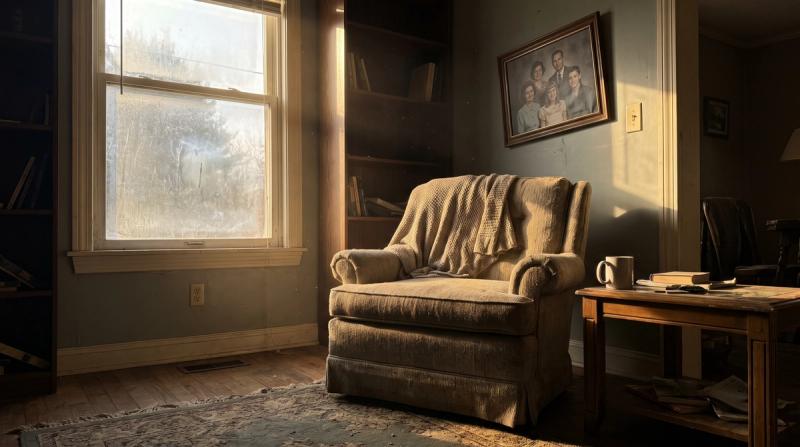
Miss Ruth's back in her apartment. Mr. Harmon's photograph hangs right where it's always hung.
And Mr. Dean, they tell me, has started covering the field trips and the school supplies for two kids on our street whose folks can't manage. He asked the principal not to give his name.
Everybody knows anyway. On a street like ours, everybody always knows...
My grandmother's been gone a lot of years now. But that Christmas I finally understood the thing she used to say till we were all sick of it.
A kindness thrown into the river will find you again downstream. Sometimes it takes forty years. But the river always remembers where it started.
Mr. Harmon threw his kindness into the water a long time ago. Asking nobody to remember. And when his widow needed it most, the whole river rose up at once and carried her home.