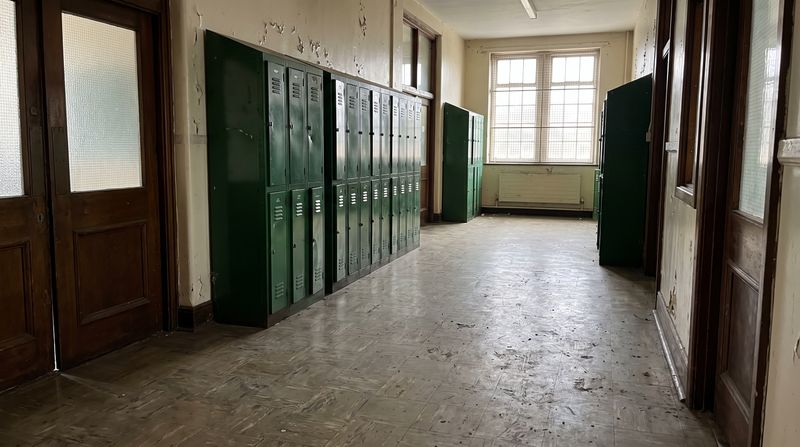
In the spring of 1985, when I was fifteen and my whole world was coming apart at the seams, somebody left a note in my school locker.
I have kept it for forty years. It has moved house with me eleven times. It has outlasted two cars, one marriage, and a great many people I was once certain I could not live without. And until last month, I had not the faintest idea who wrote it.
That Spring
Now, I should explain about that spring, because the note does not mean anything without it.
My mum was dying. It was a long illness, the sort that gives a family a great deal of time to fall to pieces slowly rather than all at once, and at fifteen I had not the first clue how to carry it. Nobody teaches you. You are simply expected to keep going to school and sitting your mock exams while the person who made your packed lunch every day of your life gets smaller in a bed at home.
So I did what teenagers do, which is to say I did it badly. I went very quiet. I stopped putting my hand up in class, though I had always rather liked answering questions (I was that sort of insufferable child, if I am honest). And I took to eating my lunch alone in the coldest corner of the yard, the bit by the bins where nobody in their right mind would come to bother me.
Someone, evidently, bothered to notice.
The Note
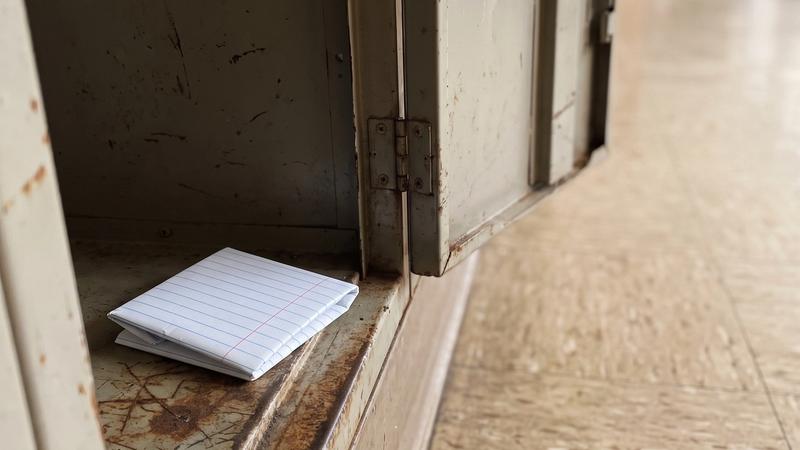
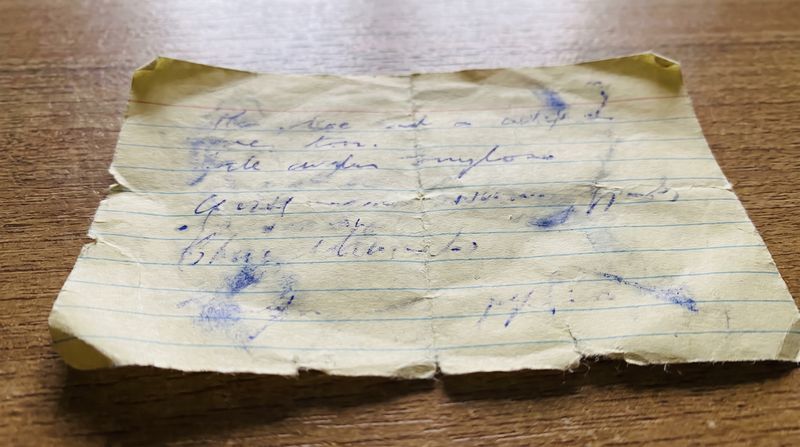
One grey morning in March I opened my locker between lessons and a folded piece of paper fell out onto my shoes. Lined paper, torn from an exercise book, folded into one of those small tight squares we all used to make before mobile phones did away with the art of it entirely.
I unfolded it standing right there in the corridor, with the crowd shoving past me, and I read it, and then I read it again, and then I had to go into the toilets for a few minutes so that no one would see my face.
This is what it said. In careful blue biro, in handwriting I did not recognise:
Ellie. I don't know if anyone has told you lately, but the world is a great deal better with you in it. Whatever is happening, it will not always feel like this. Please hang on. You are worth ten of the people who make you feel small. A friend.
That was all. No name. Just those few lines and the word Ellie, which almost nobody at that school called me, and the two words at the bottom.
A friend.
The Detective Work of a Grieving Girl
I tried to find out who wrote it. Of course I did. I asked around, as subtly as a heartbroken fifteen-year-old can manage, which, I can now tell you from long experience, is not subtle in the slightest.
I studied the handwriting of every boy who sat near me, like some junior graphologist, and I got precisely nowhere. I convinced myself it was a boy called Stephen who had once lent me a pencil (it was not Stephen). I even, at my most desperate, wondered whether I had somehow written it to myself in a state of grief and forgotten, which will tell you something about the state of my mind that spring.
Nobody confessed. Eventually I stopped asking, because my mum died in the June, and after that there did not seem much point in a mystery.
But I kept the note. I folded it back into its small square and I kept it, and here is the thing I have never quite been able to explain to anyone. On the very worst nights of my life, and there have been a few, I have taken that scrap of paper out and read it again, and every single time, some stranger from 1985 has reached across all those years and told me to hang on.
On the very worst nights of my life, some stranger from 1985 has reached across all those years and told me to hang on. And every single time, I have.
The Obituary
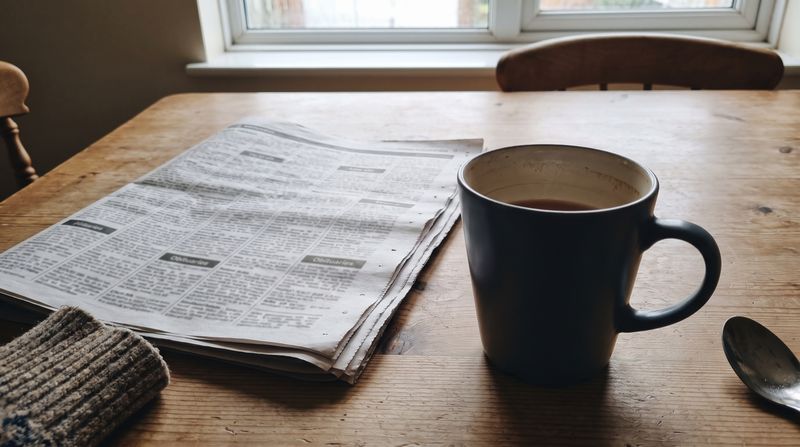
Now, at my age one develops certain morning habits, and one of the less cheerful ones is reading the obituaries in the local paper over your first cup of tea. You start doing it in your sixties. You are checking, I suppose, though you would never say so out loud.
Last month, on an ordinary Thursday, I opened the paper to that page and a face I had never seen before in my life was looking back at me. A kind, ordinary face. A man of about my own age, it said, who had died after a short illness. His name was David Holt.
I very nearly turned the page, because I did not know him from Adam. And then my eye caught on one line in the middle of the obituary, and I put down my tea rather suddenly.
It said that David had spent more than thirty years volunteering for a listening charity, the sort that sits up through the night on the end of a telephone for people who have run out of anyone else to call. And it said that his family believed this lifelong work had begun when he was a shy teenager who, too nervous to speak to anyone directly, used to leave anonymous notes of encouragement in the lockers of classmates he thought were struggling.
He always signed them, the obituary said, in the same way.
A friend.
I Went to the Funeral
I did something that spring of my sixty-fifth year that I would never ordinarily do. I went to the funeral of a man I had never met.
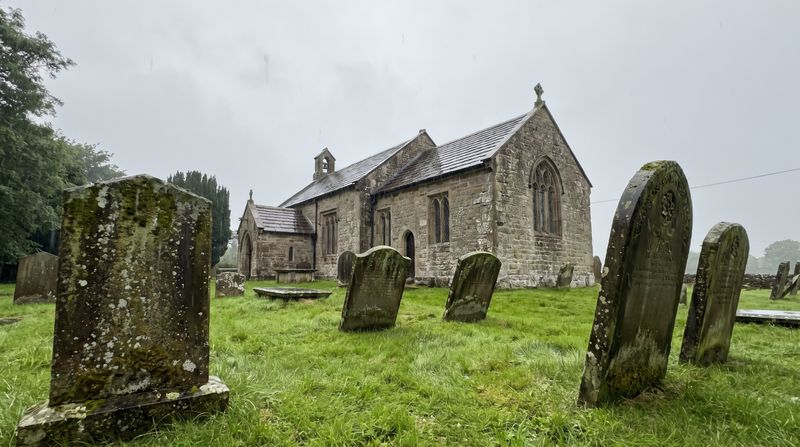
It was a small service in a stone church on the edge of Manchester, on the sort of drizzling grey day David Holt had presumably lived his whole life under, as we all do up here. I sat at the back, feeling rather like an impostor, clutching a forty-year-old scrap of paper in my coat pocket like a woman who has quite lost her senses.
Afterwards I found the courage to introduce myself to his sister, a warm woman named Judith, and I am afraid I rather blurted the whole thing out, standing there among the tea and the sandwiches. I showed her the note. I told her about 1985, and my mum, and the cold corner by the bins, and the forty years.
Judith said nothing for a long moment. Then she took my hand, and she said, "Would you come to the house? There is something I think you ought to see."
The Shoebox
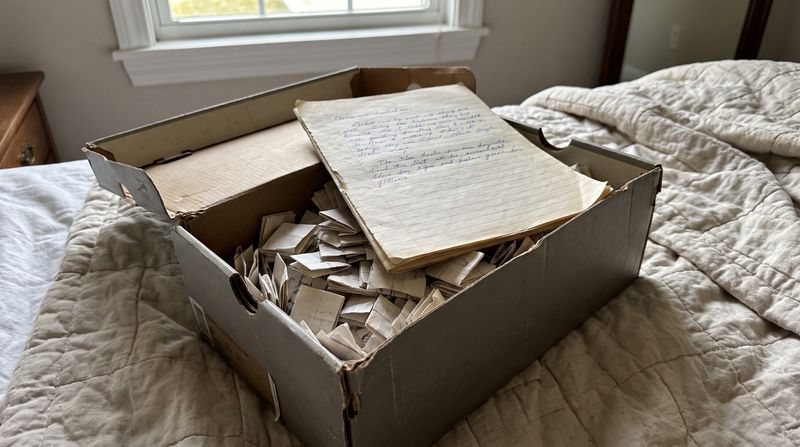
At David's house, Judith brought down a shoebox from the top of his wardrobe. Inside were drafts. Dozens of them. Notes he had written and rewritten, crossed out, tried again, all in that same careful blue biro, because it turns out that even the boy who knew exactly what to say to a stranger agonised over getting the words right.
And underneath the drafts was a list. A long list, in his handwriting, of first names. Just first names, going back decades. The people, Judith explained, that he had left notes for over the years, and worried about, and hoped were alright.
About a third of the way down, in ink that had faded to the colour of weak tea, was a single line that I had to read several times before I could take it in.
It said: "Ellie, year 10. Mum poorly. Hope she's alright."
Forty years. He had carried my name, or the small piece of it he had, for forty years, and wondered whether I was alright. And I had carried his note for exactly as long, without ever knowing so much as his name.
He had carried my name for forty years, wondering if I was alright. And I had carried his note for exactly as long, without ever knowing his.
What I Told Judith
I stayed at Judith's a good while longer than either of us expected. I told her everything the note had done. I told her that I had gone on to have a life, a proper one, with all the ordinary catastrophes and joys in it, and that on more than one of the nights when I was not sure I wanted to carry on with any of it, a scrap of paper from her brother had told me to hang on, and I had.
"He never knew," Judith said, crying and laughing at once in the way you do at these things. "That was the whole tragedy of David, really. He spent his entire life reassuring other people and he never once got to see whether any of it landed."
"It landed," I said. "You can put that on the list, next to Ellie. It landed."
Signed, A Friend
I am not, by nature, a sentimental woman. Twenty years of writing about other people's lives cures you of that quickly enough. But I have thought about David Holt every single day since that funeral.
We none of us have the faintest idea what our small kindnesses do. A boy too shy to speak tore a page from an exercise book and folded it into a locker, and he never found out that it kept a grieving girl alive long enough to become a not-entirely-hopeless old woman writing this down. He died believing, I expect, that he had simply done a small odd thing as a teenager.
I have his note still. It lives in my desk drawer now rather than a coat pocket, gone soft as cloth from forty years of handling. Some nights I still take it out and read it. I don't need it the way I once did. But I like knowing exactly where it is.
David Holt did not know my surname. I never knew his, until it was printed above his own obituary. And yet I think, in the way that actually matters, we knew each other rather well. He was, exactly as he signed himself, a friend. It only took me forty years to learn his name.