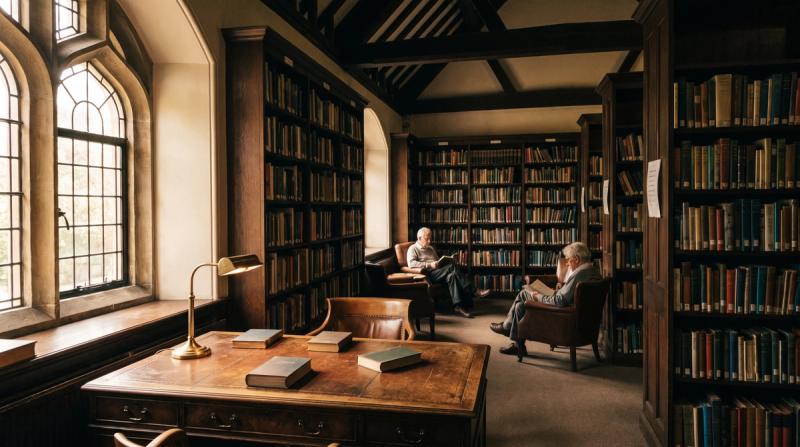
A parcel arrived at our little library on a wet morning in October, and inside it was a book that was forty-seven years overdue.
Now, I have worked at this library long enough to have seen most things a library can throw at you, and an overdue book is not, as a rule, a dramatic event. We stopped chasing fines properly years ago. Somebody brings back a novel eight months late, red in the face, and we tell them not to worry about it, and that is the end of the excitement.
But forty-seven years is a different sort of overdue. Forty-seven years is a book that went out on loan before I was born, and came back after the man who borrowed it had died. That is not a fine. That is a story arriving by post.
The Parcel
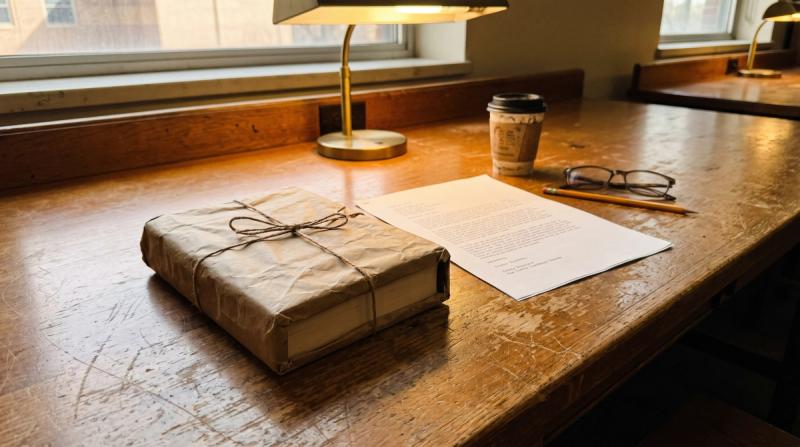
The book was a slim, battered collection of poetry, the sort of thing that would have been terribly romantic to give someone in 1977. It came wrapped in brown paper, with a typed letter from a firm of solicitors in Canada, of all places.
The letter was very formal and very sad, in the way those letters are. It explained that a gentleman named Arthur had recently passed away, and that among his effects had been found this book, long overdue to our library, along with a handwritten note from him asking that it be sent back, with his sincere apologies for its lateness.
I confess my first thought was what a lovely, eccentric thing to do. To spend your dying weeks making sure a library book got home. I had no idea, at that point, what I was actually holding.
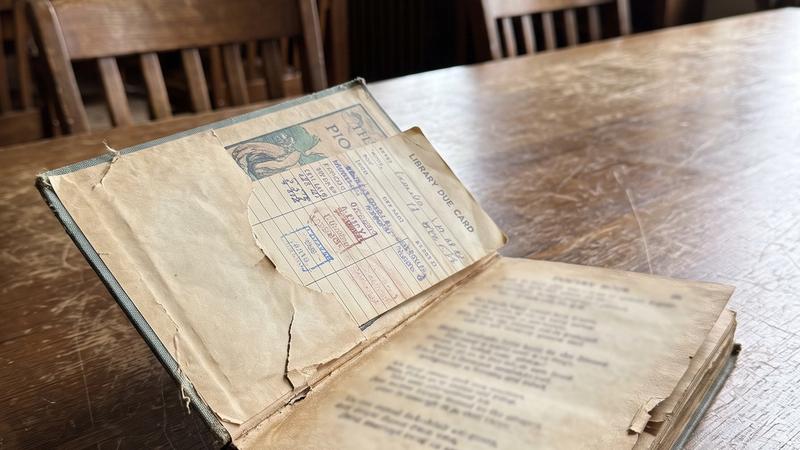
The old borrower's card was still in the sleeve at the back. We had computers now, obviously, but this book predated all of that, and there it was, a little cardboard card with a name written on it in fountain pen and a date stamp: July 1977.
I read the name out loud, mostly to myself. Arthur. And Margaret, who has run our front desk as a volunteer for thirty years and is not easily rattled, dropped the mug she was holding.
The Man Who Vanished
You have to understand, if you did not grow up here, that this town had a mystery. Every town of a certain size has one, and this was ours.
In the summer of 1977, a young man named Arthur, well liked, clever, engaged to be married to a local girl, got on a morning coach and left, and never came back. No letter. No explanation. He was there one week and gone the next, and his fiancee was left standing, and the wedding that was three weeks away never happened.
People said all the cruel things people say. That he'd got cold feet. That there was another woman. That he was a coward who'd run rather than face her. For forty-seven years, in this town, Arthur was the man who jilted that poor girl and hadn't even had the decency to say why.
And the girl he left, well. She never married. She stayed in the town, and grew older, and became one of those women people speak about kindly and sadly in the same breath. The one who was left. Everyone knew her story, or thought they did.
And here is what undoes me a little, even now. I had known her my whole life without ever knowing it was her. She was just Margaret's older sister, a quiet, kind woman who did the church flowers and always had a boiled sweet in her handbag for a fidgeting child. It never once occurred to me that she was the girl at the centre of the town's saddest story.
That is the thing about the people carrying the heaviest things. They so rarely announce it. They just do the church flowers, and keep a sweet in their bag, and get on with it, quietly, for fifty years, while the rest of us walk past and have no idea at all.
For half a century she carried the whole weight of it. Not just the loss of him, but the not knowing. The town had decided he simply hadn't loved her enough to explain. That is a terrible thing to be handed and made to hold for forty-seven years.
Her name was Eleanor. And she was Margaret's older sister.
The Note Inside the Back Cover
Margaret sat down rather heavily. And with both of us barely breathing, we opened the book properly, and there, folded and tucked inside the back cover where it had sat for forty-seven years, was a letter. In Arthur's hand. Written, from the look of the paper, a very long time ago.
It had never been sent. It had been written, and folded into the book he'd meant to return, and then, for reasons that became clear as we read it, it had gone with him across the world instead, unsent, for half a century.
I will not print all of it. Some of it belongs only to Eleanor. But the shape of it was this.
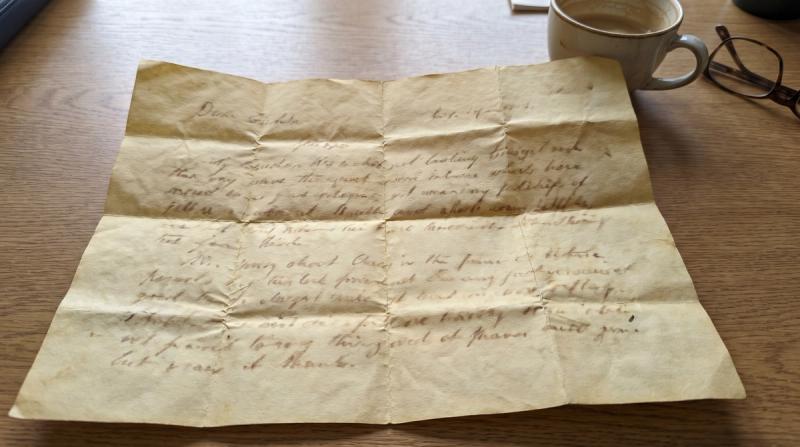
Arthur had not run from Eleanor. He had run to his father, who was dying, estranged, in another country, and who had written begging to see his son one last time and asking him to tell no one, out of some old family shame Arthur never fully explained. He'd gone, meaning to be back within the fortnight, in time for the wedding.
And then his father had lingered, and then there had been debts, and a family in crisis on the other side of the world with no one but Arthur to hold it together, and weeks became months. He wrote to Eleanor, he swore in the letter, again and again. The letters, we can only assume, were intercepted by the same relatives who wanted him to stay, or lost to the chaos of that time and that distance.
By the time he was free, a year had gone by in silence, and a proud, heartbroken young man convinced himself she would have moved on, would be better off, would surely hate him now. So he stayed away. To protect her, he told himself, in the way the young are so good at talking themselves into the very thing that will hurt everyone most.
"I told myself I was sparing her," the letter said, near the end. "I have had forty years to understand that I was only sparing myself the sight of what I had done. Tell her I wrote. Tell her I always wrote. Tell her it was never that I didn't love her. It was only ever that I was a coward about being loved back."
Margaret and I sat in that empty library for a long while after we finished reading, and neither of us said anything. Forty-seven years of a whole town tutting about a coward who jilted a good girl, and here, in my hands, was the proof that he had been anything but. That he had spent his entire life loving her from the wrong side of an ocean, too ashamed of his own silence to ever break it.
I have handled a great many books in my life. Thousands of them. I do not think I have ever held one so heavy as that slim little book of poems.
We Took the Book to Eleanor
Margaret and I closed the library early that day, which I am fairly sure is against several regulations, and we drove to Eleanor's house with the book.
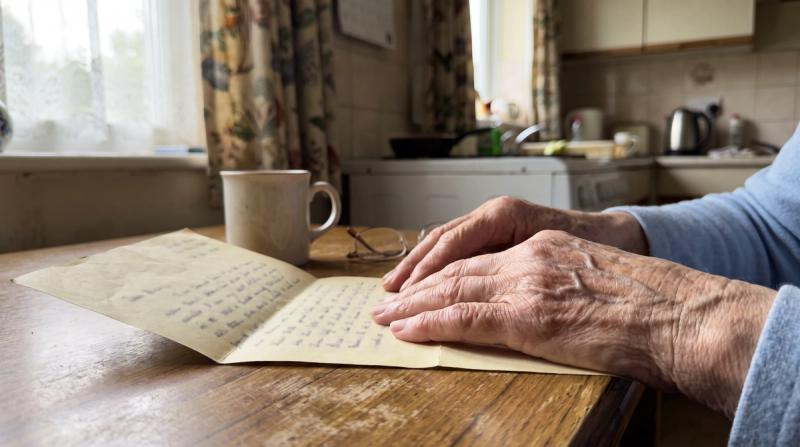
She is in her seventies now. She read the letter at her kitchen table, twice, very slowly, while Margaret held her hand. And when she finished, she did not cry the way I expected. She just put her hand flat on the old paper and said, "So he did write. I always, always wondered if he wrote."
Forty-seven years. And the thing she had wanted, it turned out, was not an apology and not even the man himself. It was to know that she had not imagined it. Nothing grander than that. That the summer had been real. That she had been loved after all, and had not been a fool to believe it.
She asked me, then, to read her one of the poems from the book. Right there at the kitchen table. So I did, and I don't mind admitting my voice was not especially steady by the end of it. And when I finished, she just nodded, once, the way you do when something has finally been put back in its proper place after fifty years in entirely the wrong drawer.
The solicitor's letter had mentioned that Arthur never married either. He'd built a quiet life in Canada, and kept the book, and the unsent letter inside it, on his shelf, every day, for the whole of it. Two people, an ocean apart, each convinced the other had let go, each holding on the entire time.
The Fine
There was, in the solicitor's parcel, a cheque. Arthur had left a sum of money to our library, "to settle my debt, which I know to be considerable."
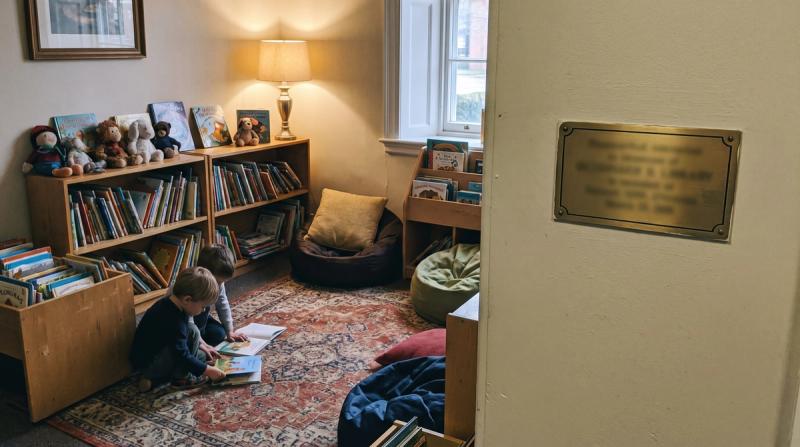
By the strict letter of the old rules, forty-seven years of overdue fines on that book would have come to a genuinely absurd figure. We did not, of course, keep the money for fines. Eleanor asked that it go towards the children's section, so that it does some good, and so there is a little brass plate there now with both their names on it. Arthur and Eleanor. Together on a wall at last, if nowhere else.
Margaret says Eleanor sleeps better now. That a weight she'd carried since she was a young woman has finally been set down. Not the grief, that doesn't leave. But the doubt. The cruel little question the whole town had planted in her, that maybe she hadn't been worth an explanation.
She was worth an explanation. She'd had one written for her forty-seven years ago. It just took a very long time, and a very late library book, to be delivered.
I have worked at this library most of my life, and I have handed over thousands of books, and I used to think the important thing about a library was the reading. I don't think that anymore.
The important thing, it turns out, is that a library will hold something safe for you for as long as it takes. A story. A truth. A folded letter in the back of a book. Forty-seven years, if that's what it takes, until the right person is finally standing at the desk to receive it.