Here's the thing about a question. The right one, asked by the right person, can sit inside you your whole life, quietly doing its work, long after the person who asked it has any idea you're still carrying it around.
Mrs. Hartley asked me a question in 1974. I answered it last month. I want to tell you about the fifty years in between.
One of the Poor Kids
I was eight, and I was one of the poor kids, and at that age you already know exactly which kind of kid you are. You can feel it. The shoes. The permission slips that never came back signed because there was nobody home who dealt with paper.
My house wasn't a place where anybody asked you what you dreamed of. My dad was around and then he wasn't, and my mom was working herself down to nothing, and "the future" was not a thing we discussed. The future was Friday. Getting to Friday. That was the whole horizon.
So when Mrs. Hartley stood up in front of class one afternoon and had us all write down what we wanted to be when we grew up, most of the kids lit up. Astronaut. Baseball player. A girl in the front wanted to be a horse, which, honestly, fair enough.
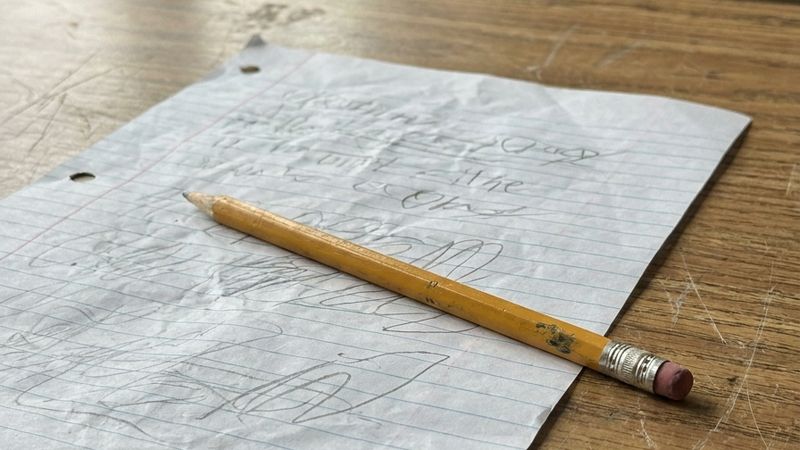
And I just sat there with my pencil, and I felt my face go hot, because I genuinely did not have anything to write. Nobody had ever told me I got to want to be something. So I wrote the only true thing I had. I wrote, "I don't know." And the kid next to me leaned over, read it, and laughed.
She did small things all that year that I only understood much later. There was always a spare coat in her closet that happened to fit me exactly when the cold came. She'd 'accidentally' pack too much lunch and need a hand finishing it. She never once let it feel like charity. She had a genius for making a poor kid believe he was doing her the favor, and I have spent a good part of my life trying to learn that particular trick.
After the Bell
Mrs. Hartley saw it. She saw everything, that woman. And when the bell rang and the room emptied out, she said, "Mark, stay a minute." And my stomach dropped, because when you're a poor kid and a teacher keeps you back, your whole body braces for it to be bad.
It wasn't bad. She came around her desk and she crouched down so we were eye to eye, which no adult ever did, and she didn't say a word about the laughing or the "I don't know."
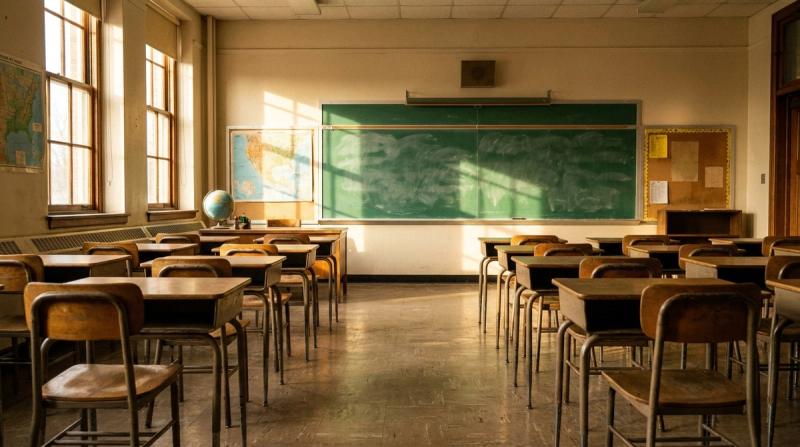
She asked me a different question. She said, "Forget what you want to be. I want to ask you something else. What's the thing you love so much that you'd do it even if nobody ever paid you a single dime for it?"
The movie version of me says something wise here. The real me was eight. I didn't even really understand the question. I think I just shrugged and looked at my shoes.
And she didn't push. She just smiled at me, and she said, "That's all right. You don't have to know today. But it's the most important question there is, so I want you to keep it. You go find out someday, and when you do, you come back and you tell me the answer. I'll wait."
I'll wait. I was eight. I figured it was just something a nice lady says. I had no idea she meant it.
The Fifty Years
Life did what life does. We moved. I lost track of Mrs. Hartley the way you lose track of a whole childhood, all at once and without noticing.
But here's the strange thing. That question never left. It'd surface at the oddest times. Sitting in a job I hated in my twenties, some voice in the back of my head going, this is not the thing you'd do for free. Late at night in my thirties, filling notebooks I never showed anybody, that voice again, warmer this time, going, well now, look at that.
There was a night in my thirties I remember exactly. Good job, steady, the kind everybody tells you to be grateful for. And I was sitting in my car in the parking garage after another gray day, and I could not make myself turn the key. And that question just floated up out of the dark, plain as if she'd said it from the passenger seat. This is not the thing you'd do for free. I quit that job inside a month. Scared my wife half to death. Best thing I ever did, and I never told a soul that a third-grade teacher pushed me out the door, because who on earth would believe it.
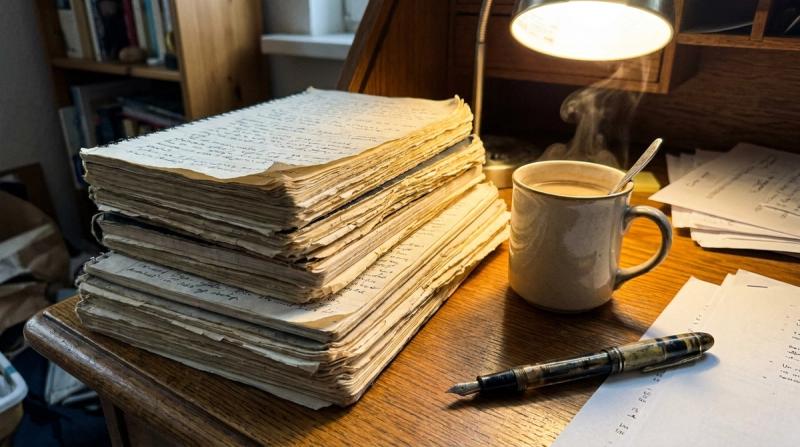
Because here's what I figured out, slowly, over a lot of years. The thing I'd do for free was this. Writing. Listening to people and getting their stories down. I've kept a notebook my whole adult life, filled with things I overheard, people I met, the waitress with the sad eyes, the two old men arguing about a ballgame that happened in 1961. I couldn't not do it. Nobody paid me for most of it for the longest time. I did it anyway, because I had to, and somewhere in there I finally understood that this was Mrs. Hartley's question, answering itself, one notebook at a time.
I became a writer. A real one, eventually, the kind who gets to do the thing he'd do for free and, some years, even gets paid. And the whole time, in the back of my mind, was an eight-year-old promise to a woman I figured was long gone. Come back and tell me the answer.
She Was Still There
Last year, a woman I went to grade school with found me online and we got to talking about the old days, and I asked, mostly not expecting anything, whatever happened to Mrs. Hartley.
She was alive. Ninety-six years old, in a care home two hours from me, sharp as a tack, my old classmate said. Still asked after her students by name.
I sat with that for about a day. And then I got in the car.
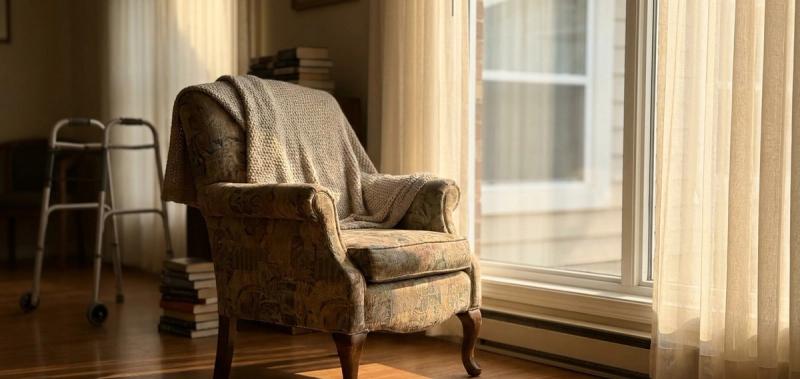
I brought her flowers, which felt thin, so I also brought a stack of my notebooks and a couple of things I'd published, not to show off, I just didn't know how else to carry fifty years into a room. And I sat down next to this tiny, bird-boned woman in a chair by a window, and I told her who I was. Mark. Third grade. 1974. The poor kid who wrote "I don't know."
And her whole face changed. And before I could get to my speech, she reached over and patted my hand and she said, "You came back to tell me the answer."
She remembered. Fifty years, thousands of children, and she remembered the question and she remembered the promise. I about came apart right there in that chair.
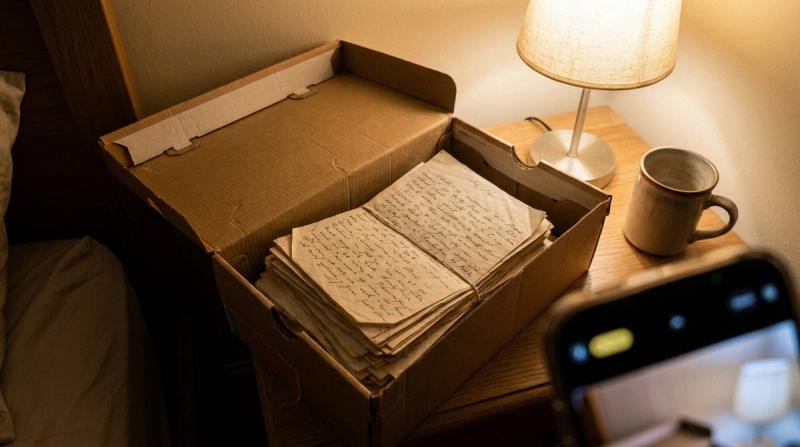
While I was there, one of the aides told me Mrs. Hartley still kept a box. Every so often across the decades, a former student would track her down the way I had, and she saved their letters and their notes in a shoebox by her bed. She read them on the nights she couldn't sleep, the aide said. A whole life's worth of children who'd come back to tell her how they turned out. I like knowing my notebooks are in a shoebox somewhere now, tucked in next to sixty years of other people's answers.
The Answer
So I told her. I said, "You asked me what I'd do even if nobody paid me. It took me about forty years to be sure, but the answer is this." And I put my notebooks in her lap. "I write down people's stories so they know somebody was listening. I'd do it for free. I have done it for free, plenty. That's the answer. That's the thing."
She held those notebooks like they were warm. She turned a few pages with her thin hands. And then she looked up at me and said the thing I'll hear in my head for the rest of my life.
"I always knew you had an answer in there," she said. "That's why I asked you and not the others. Some children already know what they love and they'll be fine. But you, you had it buried so deep you couldn't even see it. I just wanted to make sure somebody had asked you the question, so it would be in there, waiting, for whenever you were ready to dig it up. Fifty years. Well. You dug it up. Good boy."
Good Boy
Good boy. Fifty-eight years old and a grandfather, and I have never in my life been so glad to hear two words.
On the second visit she told me why she'd become a teacher, which I'd somehow never thought to wonder in fifty years. She'd been a poor kid too, back in the thirties, and there had been one grown-up who once asked her a real question, and she'd spent forty years in a classroom trying to be that for somebody else. She said she figured she'd asked ten thousand children what they'd do for free, and that I was maybe the fourth or fifth who ever came back to tell her the answer. She didn't say it sad. She said it the way a woman reports a good batting average.
I visited her three more times after that. She passed in the fall, peacefully, and her family asked me to say a few words, and of course I did, because saying a few words is the thing I'd do for free, and she's the one who found that in me.
I think about all the kids she must have done that for. All the buried answers she went digging for, one crouched-down question at a time, for a whole career. She probably never knew how most of them turned out. Teachers usually don't. They plant the thing and then the kid walks off into fifty years and they just have to trust it took.
There's a line in one of my notebooks now, the newest one, that I wrote in the parking lot of her care home after that first visit, before I'd even started the car. It just says: Told Mrs. Hartley the answer today. She was still waiting. Fifty years and she never once cleared my seat.
I go back and read that line more than I'd like to admit. It's the best thing I ever wrote, and I'd have done it for free. Which, when you think about it, is the whole answer, one more time.